
The world of artisan food extends far beyond simple consumption. Whether you’re savoring a single-origin coffee, crafting a delicate pastry, or evaluating a fine chocolate bar, a deeper understanding transforms these experiences from routine to revelatory. The knowledge that separates casual enjoyment from true appreciation encompasses sensory training, technical precision, geographical influence, and business acumen—each element building upon the others to create mastery.
This comprehensive resource connects the essential knowledge areas that elevate your relationship with coffee, chocolate, and pastry. From training your palate to identify subtle flavor nuances, to understanding how volcanic soil influences taste, to mastering the professional techniques that ensure consistent results, these interconnected skills form the foundation of culinary expertise. Whether you’re a home enthusiast looking to refine your tasting abilities or someone considering a professional path in artisan food, the principles explored here will deepen your appreciation and capability.
The journey toward food expertise begins with understanding how we perceive flavor. Your sensory system operates through a remarkable interplay of taste receptors, olfactory sensors, and tactile sensations that together create what we experience as flavor. This isn’t an innate talent reserved for professionals—it’s a learnable skill that improves with deliberate practice and proper technique.
Your tongue contains approximately 10,000 taste buds, each capable of detecting the five basic tastes: sweet, sour, salty, bitter, and umami. However, what we commonly call “taste” is actually a combination of these sensations plus aroma compounds detected by receptors in your nasal cavity. When you evaluate coffee or chocolate, roughly 80% of what you’re perceiving comes from smell rather than taste alone. This explains why a head cold dramatically diminishes your ability to appreciate food—your olfactory system is temporarily compromised.
Temperature also plays a crucial role in perception. Warmth volatilizes aroma compounds, making them more detectable, while cold temperatures can suppress sweetness perception. This is why ice cream tastes less sweet when frozen solid than when slightly melted, and why professional tasters often evaluate coffee at multiple temperature points to capture its complete flavor profile.
Comparative tasting at home provides the most effective training for your palate. The technique is straightforward: select three to five samples of the same product category—perhaps different coffee origins or chocolate percentages—and evaluate them side by side. This contrast methodology amplifies your ability to detect differences that would be imperceptible when tasting items in isolation.
Begin by observing visual characteristics, then proceed to aroma evaluation before tasting. When the sample enters your mouth, distribute it across your entire palate and note the initial impression, mid-palate development, and finish. Professional cuppers often use a slurping technique that aerates the liquid, spreading it across the tongue while simultaneously drawing aroma compounds up through the retronasal passage—the pathway connecting your mouth to your olfactory receptors.
Maintaining palate neutrality between samples is essential for accurate evaluation. Strong flavors, toothpaste residue, or even coffee consumed earlier in the day can skew your perception. Professional tasters typically follow these protocols:
The concept of terroir—how geography, geology, and climate shape flavor—applies as profoundly to coffee and chocolate as it does to wine. The same cacao variety grown in Madagascar versus Ecuador will produce distinctly different flavor profiles due to variations in soil composition, rainfall patterns, altitude, and microbial ecosystems. Understanding these geographic influences allows you to anticipate flavor characteristics and appreciate the uniqueness of regional products.
Coffee and cacao plants absorb minerals from the soil, which subtly influence the final flavor profile. Volcanic soils, rich in minerals like potassium and phosphorus, are particularly prized for coffee cultivation. Regions such as Guatemala’s Antigua, Hawaii’s Kona district, and parts of Indonesia sit on volcanic terrain that contributes to the coffee’s complex acidity and body. The porous nature of volcanic soil also provides excellent drainage, preventing root rot while retaining sufficient moisture—a balance that stresses plants just enough to concentrate flavor compounds in the beans.
Clay-heavy soils, conversely, retain more water and tend to produce coffees with heavier body but less brightness. Sandy soils drain quickly and often yield lighter, more delicate flavor profiles. These aren’t absolute rules—countless other factors intervene—but soil type provides a useful starting point for understanding regional characteristics.
Altitude creates a particularly dramatic impact on coffee quality. Beans grown above 1,200 meters (roughly 4,000 feet) develop more slowly in the cooler temperatures, allowing sugars and flavor compounds to develop more fully. This extended maturation period typically produces denser beans with more pronounced acidity and complexity. Lower-altitude coffees often exhibit simpler, more straightforward profiles with chocolate and nutty notes.
Climate change now poses measurable risks to traditional growing regions. Rising temperatures are pushing viable cultivation zones to higher elevations, and increasingly erratic rainfall patterns disrupt flowering and harvest cycles. Some regions that have produced exceptional coffee for generations may become unsuitable within the coming decades, making current crops from these areas increasingly precious.
The gap between home cooking and professional pastry lies primarily in precision and control. While home recipes often tolerate approximate measurements and flexible timing, professional techniques demand exactitude because the chemistry of pastry allows little margin for error. Understanding these principles transforms unreliable results into consistent success.
Volume measurements (cups, tablespoons) introduce significant variability because ingredients settle differently and users measure with varying technique. Professional pastry relies on weight-based recipes because 100 grams of flour is always 100 grams, regardless of how compacted it is or who measures it. This precision weighing becomes crucial when working with formulas that depend on specific ratios—ganache, for instance, typically follows a 1:1 ratio of chocolate to cream by weight for a balanced, stable emulsion.
Temperature control proves equally critical. Chocolate tempering requires heating to 45-50°C (113-122°F), cooling to 27°C (80°F), then warming slightly to 31-32°C (88-90°F) for dark chocolate. This precise thermal cycle encourages cocoa butter crystals to form in the stable Type V configuration, resulting in shiny, snappy chocolate with good shelf stability. A deviation of just a few degrees can produce dull, soft chocolate that blooms prematurely.
Gelatin types—sheet versus powder, bloom strength variations—behave differently in recipes and aren’t directly interchangeable without calculation. Professional recipes typically specify bloom strength (often 200 bloom for sheet gelatin) because this measurement indicates gelling power. Using the wrong type can result in desserts that are too firm, too soft, or that weep liquid.
Humidity represents one of pastry’s greatest challenges. Sugar work, meringues, and certain chocolate preparations absorb atmospheric moisture, becoming sticky or grainy. Professional kitchens often maintain humidity below 50% in areas dedicated to these tasks. Home bakers in humid climates should avoid sugar work on rainy days and store finished products with desiccant packets or in climate-controlled environments.
Transforming passion for chocolate, coffee, or pastry into a sustainable career requires more than technical skill. The business dimension—from sourcing quality ingredients to building professional relationships to understanding market positioning—determines whether artisan food businesses thrive or join the majority that fail within their first few years.
The craft of chocolate making demands a diverse skill set spanning food science, aesthetic design, business management, and marketing. Successful chocolatiers must understand crystallization chemistry, develop a palate for evaluating couverture quality, master enrobing and molding techniques, and create visually appealing products that command premium pricing. This combination explains why professional training programs typically span months rather than weeks.
Sourcing quality couverture—the high-cocoa-butter chocolate that professionals use—requires relationships with suppliers and knowledge to evaluate specifications like fluidity, flavor profile, and tempering behavior. Single-origin couvertures offer distinctive flavor profiles but may require formula adjustments compared to blended couvertures designed for consistent performance.
In artisan food businesses, relationships with suppliers, retail partners, and corporate clients often determine success more than product quality alone. The reciprocity principle—providing value before requesting favors—builds goodwill that opens doors. This might mean offering product samples to a potential retail partner, providing staff training on your products, or creating custom solutions for their specific needs before negotiating shelf space.
Selecting the appropriate partnership tier matters significantly. Wholesale relationships typically operate on 50% markups, meaning your production costs must allow profitable sales at half the retail price. Consignment arrangements reduce the retailer’s risk but tie up your inventory and cash flow. Direct-to-consumer sales through farmers markets or online channels preserve margins but demand marketing expertise and time investment.
The subscription box model has transformed how enthusiasts discover artisan coffee, chocolate, and specialty foods. These services employ curation algorithms—whether human experts, data-driven recommendations, or hybrid approaches—to introduce subscribers to products they’re unlikely to find independently. Understanding how these systems work helps you maximize value and avoid common pitfalls.
Successful subscriptions balance discovery with comfort. Pure discovery boxes that consistently push unfamiliar products can lead to subscriber fatigue and cancellation, while boxes that only deliver safe, familiar items fail to justify their existence. The sweet spot typically involves 60-70% products aligned with stated preferences and 30-40% carefully selected departures that expand horizons without alienating subscribers.
Timing gift subscriptions requires consideration of the recipient’s situation. A three-month coffee subscription starting in early December ensures deliveries during the gift-giving season and into the new year, maintaining presence beyond the initial gesture. However, be mindful of cancellation policies and auto-renewal terms—many services make cancellation unnecessarily difficult, which may reflect poorly on you as the gift-giver when the recipient tries to modify their subscription.
The role of dessert in a meal extends beyond simple sweetness. Understanding the cultural evolution of the final course—from heavy, elaborate Victorian creations to lighter, contemporary presentations—reveals how desserts function within the broader dining experience and how to design finales that satisfy without overwhelming.
Sugar triggers dopamine release in the brain’s reward centers, creating satisfaction that signals meal completion. However, this same mechanism can work against you if dessert arrives when diners are already uncomfortably full. Professional menu designers account for the entire meal’s progression, ensuring earlier courses don’t overfill guests before the final sweet course arrives.
The plated versus shared dessert decision impacts both the dining experience and practical considerations. Individual plated desserts allow precise portion control and elegant presentation but require more labor and generate more dishes. Shared desserts encourage social interaction and permit diners to self-regulate portions, but can create awkwardness around equitable distribution and varying appetites.
A successful dessert considers what preceded it. After a rich, savory meal, lighter fruit-based desserts or sorbets often provide more satisfaction than heavy chocolate preparations. The concept of palate fatigue applies to menus as much as to tasting sessions—repeated similar flavors throughout a meal diminish the impact of each subsequent course.
Timing the sugar rush involves understanding that simple sugars enter the bloodstream within 15-20 minutes, while complex carbohydrates and those consumed with fat digest more slowly. A dessert served at the meal’s conclusion hits differently than one offered after coffee and conversation. Some dining cultures build in this interval deliberately, allowing savory courses to digest before presenting sweets separately, which renews appetite and appreciation for the final course.
The knowledge areas explored here interconnect in countless ways—your trained palate informs ingredient sourcing decisions, terroir understanding enhances product selection, technical precision enables professional execution, and business acumen transforms expertise into sustainable practice. Each element strengthens the others, building toward a comprehensive understanding that elevates both your appreciation and capability in the world of artisan food.
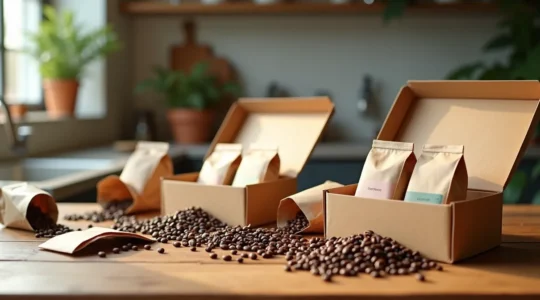
A coffee subscription’s true worth isn’t in convenience, but in its potential as a paid educational service that refines your taste and shields you from marketing ploys. The premium price funds expert human curation that consistently outperforms taste algorithms, delivering…
Read more
A cheap corporate gift is a liability, not an asset, actively eroding client relationships and generating a negative return on investment. The act of gifting triggers a psychological need for reciprocity; a low-quality gift creates a negative emotional debt. Strategic…
Read more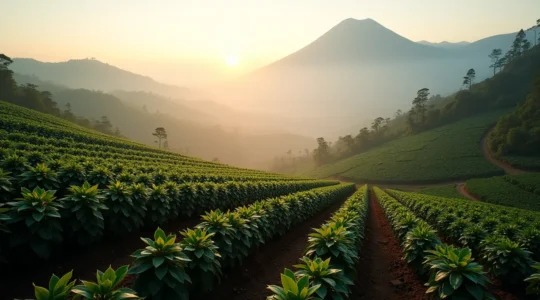
The exceptional taste of volcanic coffee isn’t magic; it’s a direct result of specific geochemical processes where the soil’s mineral composition directly builds the flavor profile of the bean. Volcanic soils (Andisols) are rich in phosphorus and potassium, which the…
Read more
The flavors in your coffee cup are not an accident; they are a direct result of the specific geographical coordinates where the beans were grown. The “Coffee Belt” is more than a location; it’s a system where factors like volcanic…
Read more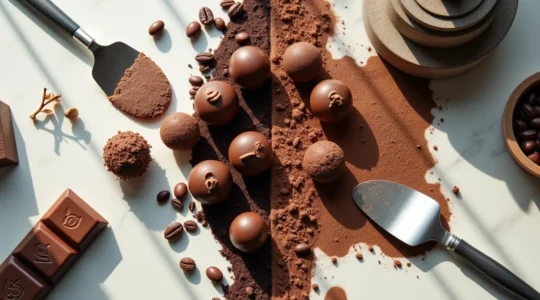
The common belief that a maker creates chocolate and a chocolatier simply uses it is a profound oversimplification. A Chocolate Maker is a raw material processor, transforming agricultural cacao beans into stable, finished chocolate bars through industrial and agricultural science….
Read more
The decline of the traditional dessert course isn’t simply about health fads or cost-cutting; it’s a profound cultural shift where the meal itself is being ‘unbundled’. Diners are increasingly seeking specialized satisfaction, opting for dedicated dessert shops over a restaurant’s…
Read more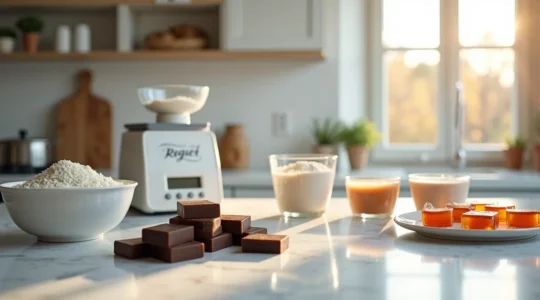
The secret to high-end pastry isn’t about expensive, specialized equipment; it’s about mastering fundamental principles. Forget the intimidation of complex recipes. By understanding the ‘why’ behind precision, temperature control, and timing, you can translate the magic of a professional kitchen…
Read more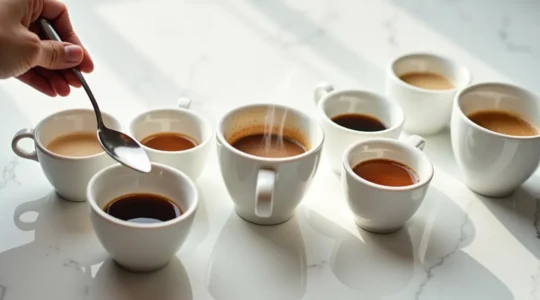
Training your coffee palate is not an abstract art but a trainable skill based on systematically isolating your sensory inputs. Most of what you perceive as “flavor” is actually aroma detected through the back of your throat, a process called…
Read more