
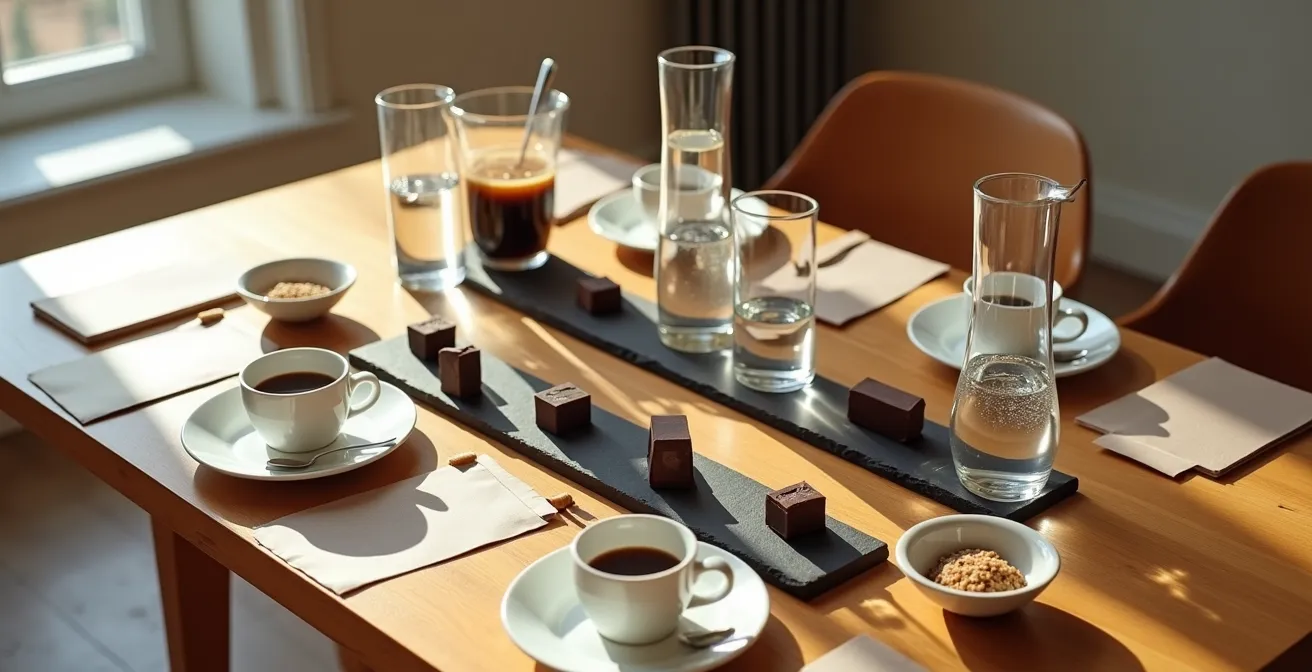
In summary:
- Success lies in understanding the science of “flavor bridging” between coffee and chocolate.
- Arrange your tasting from lightest to darkest, both in coffee roast and chocolate intensity, to avoid palate fatigue.
- For beginners, a complementary strategy (matching intensities and notes) is more reliable than a contrasting one.
- Guide your guests’ experience with a structured tasting method and open-ended questions to foster discussion.
- Control key variables like coffee temperature and palate cleansers to ensure every flavor is perceived clearly.
Transforming your living room into a sophisticated tasting salon is an alluring idea. Many hosts, eager to entertain friends with a refined, non-alcoholic activity, reach for two beloved staples: coffee and chocolate. The common approach is simple enough—brew a pot, unwrap a few bars, and hope for the best. This often leads to a pleasant but forgettable experience, where dominant flavors overpower nuanced ones and the true potential of the pairing is lost. Guests may enjoy the treats, but they don’t leave with a new appreciation for the complexities they’ve just tasted.
The conventional wisdom to “just buy good quality products” is a start, but it’s far from the whole story. The secret to a truly professional-level pairing party doesn’t lie in the price tags, but in the deliberate act of orchestration. But what if the key wasn’t just in what you serve, but in *how* you serve it? The true art is in understanding the sensory science at play, from the molecular connections between bean and cacao to the precise sequence that guides your guests’ palates on a journey of discovery. It’s about creating a narrative with flavor.
This guide will equip you with the structured methodology of a gastronomy professional. We will move beyond generic advice to give you the precise techniques for curating a memorable sensory event. You’ll learn to master flavor bridging, arrange a logical tasting progression, and facilitate a guided discovery that will leave your guests impressed and enlightened. Get ready to elevate your hosting from a simple get-together to a celebrated occasion.
To help you navigate this sensory exploration, we’ve structured this guide to walk you through every step of the planning and execution process. Below is a summary of the key stages you’ll master to host your event like a seasoned professional.
Summary: Your Guide to a Professional Coffee and Chocolate Tasting
- Why Finding a Common Note Links Coffee and Chocolate?
- How to Arrange the Tasting Mat for Logical Progression?
- Complement vs Contrast: Which Strategy for Beginners?
- The Sequencing Mistake: Serving the Sweetest Chocolate First
- When to Discuss the Flavors: During or After Tasting?
- How to Order Your Pastry Flight to Avoid Palate Fatigue?
- When to Sip the Coffee: Before or After the Chocolate Melt?
- Is a Professional Tasting Workshop Worth the Investment?
Why Finding a Common Note Links Coffee and Chocolate?
The magnetic attraction between coffee and chocolate is more than just a happy accident; it’s a matter of complex chemistry. The reason they harmonize so beautifully is that they share a foundational language of flavor compounds. This concept, known as flavor bridging, is the secret weapon of professional tasters. During the roasting process, both coffee beans and cacao undergo the Maillard reaction, a chemical transformation that creates hundreds of new aromatic molecules. In fact, research shows that coffee roasting can produce over 900 aromatic volatile compounds, many of which have counterparts in roasted cacao.
To understand this connection, it’s helpful to visualize the shared textures and origins of these two products. The deep, rich colors and intricate surfaces seen below are a visual hint at their shared chemical complexity.
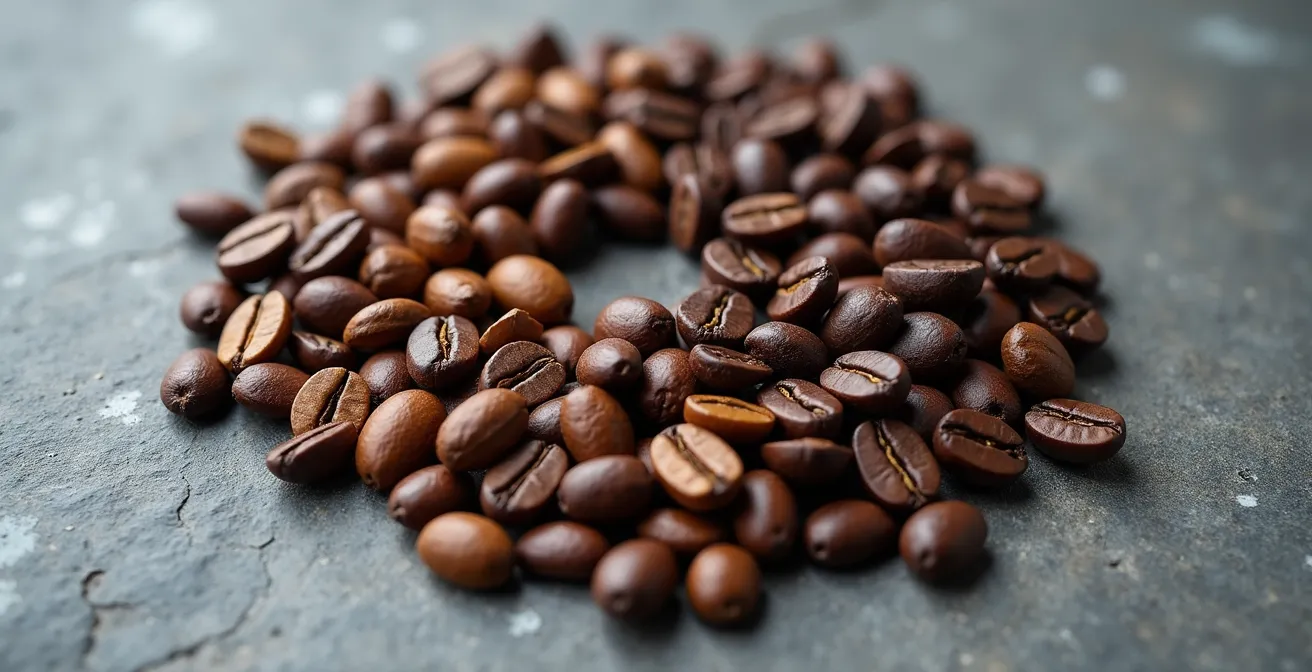
At the heart of this connection are compounds called pyrazines. These are responsible for the signature roasted, nutty, and earthy notes that we associate with both a fresh cup of coffee and a quality piece of chocolate. When you pair a coffee with a chocolate that both have strong pyrazine-driven notes (like a nutty Brazilian coffee with a nutty Madagascan chocolate), you’re not just tasting two separate things; you’re creating a synergistic effect where the shared notes amplify each other, creating a richer, more cohesive flavor experience. Understanding this principle is the first step from simply serving coffee and chocolate to truly pairing them.
How to Arrange the Tasting Mat for Logical Progression?
Once you’ve selected your pairings, the next step is staging the experience. A professional tasting is not a random free-for-all; it’s a carefully sequenced journey. The physical layout of your tasting mat is your script, guiding your guests from one sensory chapter to the next. The goal is logical progression to prevent palate fatigue and allow each pairing’s unique character to shine. The fundamental rule is to move from light to intense. This applies to both the coffee’s roast level and the chocolate’s cacao percentage.
This overhead view of a well-organized station demonstrates the minimalist, structured approach you should aim for. Each element has its place, creating an intuitive flow for the taster.
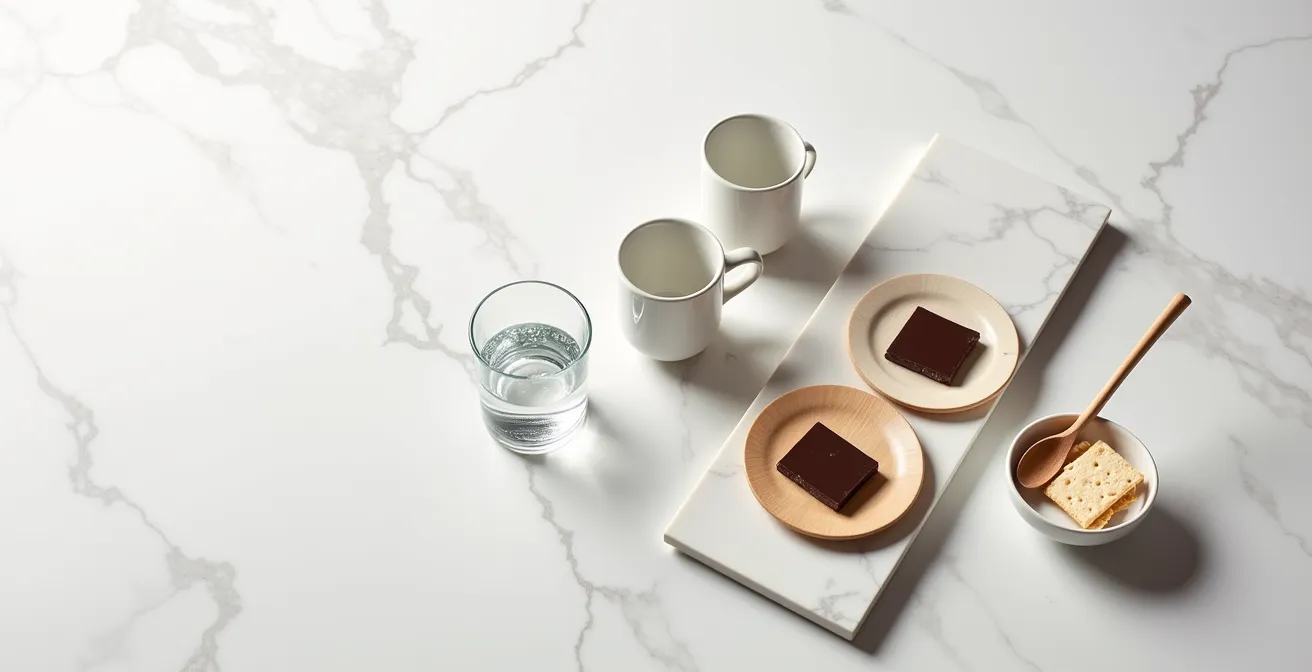
To execute this professionally, your arrangement must be deliberate. A disorganized table leads to a confused palate. The key is to create dedicated “stations” for each pairing. Start with your lightest roast coffee paired with the chocolate with the lowest cacao percentage you’re featuring (though still ideally a dark chocolate to start). From there, progress systematically. At each place setting, include a small glass of sparkling water and some unsalted crackers or plain bread. These act as palate cleansers, essential for resetting the taste buds between pairings. Finally, providing small notebooks and pencils encourages guests to jot down impressions, turning a passive tasting into an active, engaging analysis.
This comparative table, based on expert recommendations, provides a clear roadmap for your tasting flight. An analysis from the Michelin Guide highlights a similar progression, confirming this as an industry best practice.
| Coffee Type | Chocolate Match | Position Order |
|---|---|---|
| Light Roast | 35-40% Milk Chocolate | First |
| Medium Roast | 53-60% Dark Chocolate | Second |
| Dark Roast/Espresso | 70-80% Dark Chocolate | Last |
Complement vs Contrast: Which Strategy for Beginners?
With your coffees and chocolates selected, you face a strategic choice: do you pair them to complement or to contrast? A contrasting pairing, such as a bright, acidic coffee with a creamy, sweet white chocolate, can be exciting but is notoriously difficult to balance. For a beginner host, the risk of one element overpowering the other is high. A punchy coffee can completely erase a delicate chocolate, leading to a “flavor disparity” where the pairing fails to create a new, harmonious experience. This is why professionals overwhelmingly recommend a complementary strategy for those new to hosting.
The core principle of a complementary strategy is to match intensity with intensity. A bold, full-bodied Sumatran coffee needs an equally robust, high-cacao dark chocolate. A delicate, floral Ethiopian Yirgacheffe, on the other hand, will sing when paired with a chocolate that shares its fruity or floral notes. This approach is about creating resonance, not competition. As the experts at Russell & Atwell advise in their guide to pairing, the goal is to find common ground.
Match intensity: bold coffee with bold chocolate, gentle coffee with gentle chocolate. Think complementary flavours: nutty coffee with nutty chocolate, fruity coffee with fruity chocolate.
– Russell & Atwell Chocolate Experts, Russell & Atwell’s Expert Coffee and Chocolate Pairing Tips
Think of it like building a chord in music. The notes are different, but they work together to create a richer sound. A coffee with notes of cherry and a chocolate with hints of raspberry will create a beautiful “red fruit” chord on the palate. By focusing on these complementary pairings, you create a more reliable and educational experience for your guests, allowing them to easily identify the “flavor bridge” you’ve built between the two. It’s a surefire way to achieve a sophisticated and successful tasting.
The Sequencing Mistake: Serving the Sweetest Chocolate First
One of the most common and critical errors in a tasting flight is starting with the sweetest, most sugar-forward item. This mistake, often made with the best intentions, instantly leads to palate fatigue. When your taste buds are hit with a high level of sweetness first (typically from a milk or white chocolate), their ability to perceive subtle, complex, and bitter notes in subsequent items is significantly diminished. The more nuanced, high-cacao chocolates and lighter-roast coffees that follow will taste flat, overly bitter, or uninteresting by comparison.
The professional approach is to sequence in the opposite direction: from least sweet to most sweet, or from highest cacao percentage to lowest. This allows the palate to remain sensitive and appreciative of the delicate complexities of each pairing. For pairings with more earth-toned coffees, chocolate experts recommend a 53% minimum cocoa content to ensure the chocolate has enough character to stand up to the coffee without relying on sugar. By starting with a 70% or 80% cacao chocolate, you are priming your guests’ palates to look for complexity, not just sweetness. The milk chocolates can then be served at the very end as a distinct “dessert flight,” separate from the analytical tasting.
This principle of “likes with likes” should guide your entire sequence. A dark roast coffee will naturally find a friend in a dark, intense chocolate, while a lighter, creamier chocolate is better suited to a light roast. Adhering to this progression is non-negotiable for a professional-level experience.
Your Action Plan: The Cacao & Roast Progression Rule
- Pair likes with likes: Match darker chocolates with darker roasts and lighter, creamier chocolates with light roasts.
- Start the tasting with the highest cacao percentage chocolate (e.g., 70-90%) paired with the lightest coffee roast.
- Progress to the medium cacao percentage chocolates (e.g., 50-70%) as you move to medium roasts.
- Conclude the main tasting with the lowest cacao percentage dark chocolates, or save milk chocolates (30-50%) for a separate dessert flight.
- Ensure the progression of both coffee and chocolate is aligned to create a cohesive sensory journey.
When to Discuss the Flavors: During or After Tasting?
Orchestrating the tasting is as much about managing conversation as it is about managing flavors. The question of when to encourage discussion is crucial. If guests talk too early, they can influence each other’s perceptions—a phenomenon known as flavor anchoring. If you wait too long, the fleeting sensory details might be forgotten. The professional solution is a structured “Sip, Savor, Share” method that creates space for individual reflection before group discussion.
The process should be guided for each pairing. First, instruct your guests to simply experience the pairing without speaking. This is the “Savor” phase. They should take a sip of coffee, let a piece of chocolate melt on their tongue, and then take another sip, paying close attention to how the flavors evolve and interact. Only after everyone has had a moment for this silent, personal analysis should you open the floor for discussion. This is the “Share” phase.
As the host, your role is to be a facilitator, not a lecturer. Your goal is to help guests find their own language to describe their experience. Instead of asking leading questions like, “Do you taste the cherry notes?” which can create pressure to agree, use open-ended prompts. Ask, “What does this aroma remind you of?” or “What textures did you notice as the chocolate melted?” These questions encourage guided discovery and validate each guest’s unique perception. The ultimate goal is to spark a lively discussion where guests compare their notes, creating a shared, collaborative experience of discovery.
How to Order Your Pastry Flight to Avoid Palate Fatigue?
While coffee and chocolate are the stars of the show, incorporating a flight of small pastries can elevate the experience. However, this introduces another variable that must be carefully managed to prevent palate fatigue. The same principles of progression apply: you must arrange the pastries in a logical sequence based on their intensity. The primary factors to consider are fat, texture, and sweetness.
Begin with the lightest and least sweet item. A light, almond-based financier or a simple madeleine is an excellent starting point. These have a relatively low fat content and moderate sweetness, which won’t overwhelm the palate. From there, you can progress to something with a crisper texture and slightly more sugar, like a classic biscotti, which is perfect for dipping. The richer, denser items should always come last. A fudgy, high-fat brownie or, as the grand finale, a molten chocolate lava cake with its creamy center, should conclude the flight. Serving the brownie before the financier would exhaust the taste buds, making the more delicate pastry taste bland.
As with the coffee and chocolate, providing palate cleansers is non-negotiable. As the experts at BoxKite Cafe emphasize, supplying water and plain crackers is essential. This allows guests to neutralize their palates between each pastry or pairing, ensuring they can fully appreciate the unique characteristics of every item you serve. This structured approach to the food demonstrates a high level of thoughtfulness and transforms a simple snack offering into a curated part of the sensory journey.
The following table provides a clear, professional model for structuring your pastry flight, moving logically from light to rich.
| Pastry Type | Fat Level | Texture | Sweetness | Order |
|---|---|---|---|---|
| Financier | Light | Dense | Low | 1st |
| Madeleine | Medium | Spongy | Medium | 2nd |
| Biscotti | Low | Crispy | Medium | 3rd |
| Brownie | High | Chewy | High | 4th |
| Chocolate Lava Cake | Very High | Creamy | Last |
When to Sip the Coffee: Before or After the Chocolate Melt?
This is one of the most debated micro-details in the world of tasting, but professionals have a clear preference. While some advocate for sipping coffee first to “prime” the palate, the more effective technique for a harmonious pairing is the “chocolate first” method. The logic is simple: you want to coat your mouth with the fats and flavors of the chocolate *before* introducing the hot liquid of the coffee. This allows the coffee to slowly melt the chocolate further, releasing a new wave of volatile aromatic compounds and creating a beautifully integrated, evolving flavor experience in your mouth.
The process is precise. First, cleanse the palate with water. Then, place the piece of chocolate on your tongue and let it begin to melt for 20-30 seconds. Do not chew it. Once it has softened and coated your mouth, take a sip of the coffee. The heat and liquid will interact with the melted chocolate, creating a unified flavor that is often greater than the sum of its parts. This method also enhances the perceived sweetness and aroma of the coffee, often making added sugar unnecessary.
Another critical variable in this step is temperature. Coffee that is too hot will scald the tongue and obliterate the delicate flavors of the chocolate. Coffee that is too cool will fail to melt the chocolate properly. To achieve the perfect interaction, barista experts recommend serving coffee at 140-160°F (60-70°C). You can maintain this by pre-warming your cups with hot water and using a thermal carafe. Mastering this specific sequence of melt-then-sip, at the correct temperature, is a hallmark of a professionally executed tasting.
Key Takeaways
- The success of a pairing relies on scientific principles like “flavor bridging” and matching intensities.
- A structured progression from light to dark/intense is crucial for both the tasting mat layout and the sequence of items served.
- Guided discovery, using open-ended questions after a period of silent tasting, creates a more engaging and personal experience for guests.
Is a Professional Tasting Workshop Worth the Investment?
After diving into the nuances of a professional tasting, you might wonder if it’s simpler to just hire an expert or attend a workshop. A professional workshop, typically costing between $75-$150 per person, offers undeniable benefits: access to expert guidance, professional-grade equipment, and a curated environment designed for learning. An expert can calibrate your palate and provide a rich vocabulary for describing flavors, accelerating your learning curve immensely.
However, the beauty of a coffee and chocolate tasting is that you can replicate the essence of a professional workshop at home with a bit of research and planning. The initial investment in quality beans and chocolate for a DIY event is significantly lower, around $30-$50. All the core principles—palate sequencing, flavor bridging, and guided discussion—can be implemented using readily available online resources and your home brewing equipment. The social element of learning in a group is also easily recreated by simply inviting your friends.
Ultimately, the choice depends on your goal. If you want to rapidly develop your own palate as a serious hobbyist, a workshop is a fantastic investment. But if your goal is to host a sophisticated and memorable event for friends, a well-planned DIY approach can be just as rewarding and impactful. You can even add creative twists to make it uniquely yours.
Case Study: The Home-Based Gamification Approach
One enthusiast turned their birthday party into an amazing success by framing it as a “Coffee-Pairing Dinner.” The host’s partner, a private chef, created a multi-course meal where each course was paired not with wine, but with a different coffee prepared in a unique style (espresso, iced coffee, cappuccino, vac pot). This “gamified” approach transformed a simple tasting into a creative and highly engaging event, proving that the spirit of a professional workshop can be captured at home with creativity and passion.
By applying these structured principles, you are no longer just a host; you are a curator of sensory experiences. Start planning your event today to share the fascinating world of coffee and chocolate with your friends in a truly professional way.
Frequently Asked Questions About Coffee & Chocolate Pairings
What should hosts ask during tasting?
To guide your guests without leading them, ask them to describe what they notice in their own words. Good opening questions include focusing on the senses, such as “What do you smell—is it a citrus, nutty, or floral aroma?” or “What textures do you feel as the chocolate melts?”
How to prevent flavor anchoring?
Flavor anchoring happens when one person’s opinion influences the group. To prevent this, use open-ended questions like, “What does this remind you of?” or “What’s the most surprising part of this pairing?” These encourage individual reflection rather than seeking a “correct” answer.
When should guests share impressions?
After each pairing flight, once everyone has had a moment to taste and reflect silently, you can spark a discussion. A great way to start is by asking what each guest’s favorite coffee or pairing was so far, and more importantly, asking them to explain why. This encourages personal stories and comparisons.