
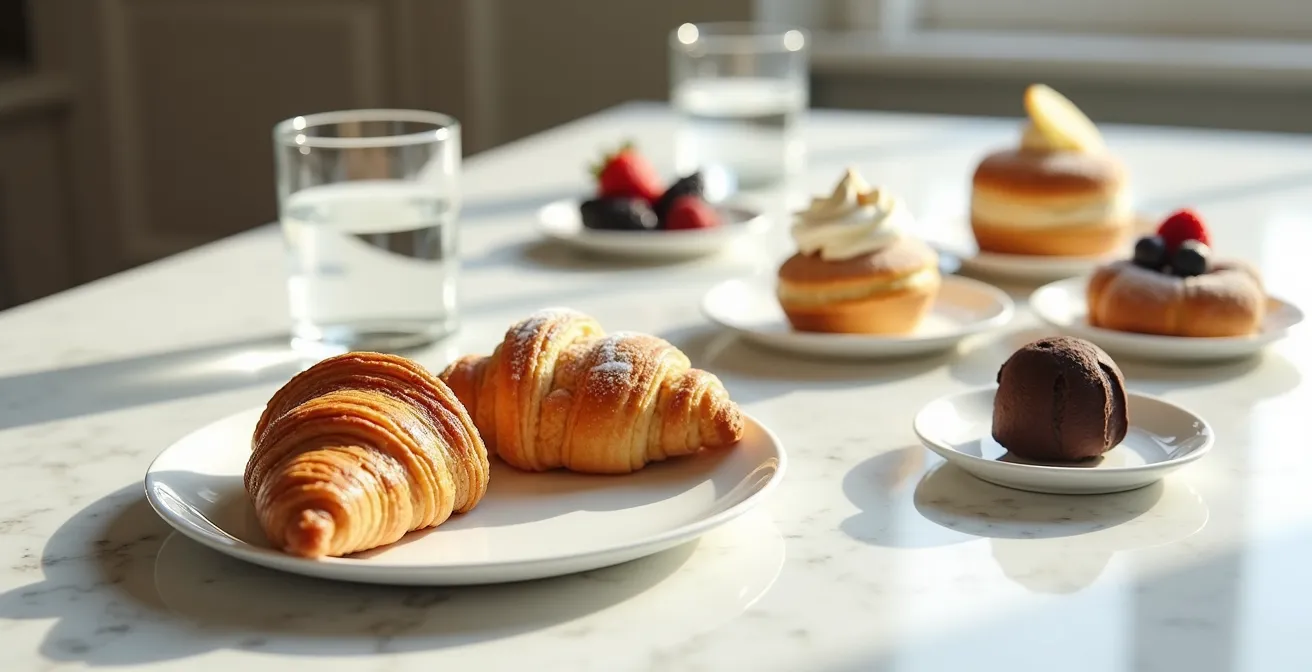
In summary:
- Achieving a gourmet experience is about technique, not budget. Focus on how flavors are perceived.
- Serve pastries at slightly below room temperature to unlock their full aromatic potential.
- Structure the tasting from light and acidic to rich and complex to prevent palate fatigue.
- Incorporate contrasting textures and a balance of sweet, tart, and bitter notes on your platter.
- The timing of service is critical; a pause after the main course enhances sensory appreciation.
You want to host an event that feels special, memorable, and sophisticated. A gourmet pastry tasting seems like the perfect idea, but the thought of shelling out for high-end patisserie can be intimidating. The common advice is to simply buy a nice variety, arrange them on a pretty platter, and call it a day. But this approach often misses the mark, leaving guests with a beautiful but muddled and overwhelming sugar rush rather than a true culinary experience.
The secret to an unforgettable tasting that feels like a hundred-dollar affair doesn’t lie in the price tag of the pastries. It lies in the art of sensory orchestration. The world’s best pastry chefs understand that flavor is a multisensory experience shaped by temperature, order, texture, and even timing. They don’t just serve desserts; they design a flavor narrative that guides the palate on a deliberate journey.
What if the key to elevating your hosting was not in spending more, but in understanding the simple science of taste? By mastering a few professional techniques, you can unlock complex layers of flavor in even modestly priced pastries, transforming a simple get-together into a sophisticated event. This guide will walk you through the very same principles that culinary experts use to create powerful gastronomic emotions, all while staying comfortably under budget.
This article provides a complete playbook for designing and executing a professional-level pastry tasting at home. The following sections break down the essential strategies, from temperature control to creating a narrative with your menu.
Summary: The Professional’s Guide to Pastry Tasting
- Why Serving Pastries Cold Masks 40% of the Gourmet Flavors?
- How to Order Your Pastry Flight to Avoid Palate Fatigue?
- Natural Extracts vs Artificial Flavoring: Which One for High-End Pastry?
- The Flavor Pairing Mistake That Ruins a Gourmet Dessert Platter
- When to Serve Dessert: The Perfect Timing for Maximum Gastronomic Emotion
- How to Design a Menu That Tells a Personal Story?
- Why You Can’t Taste Coffee Notes When Your Nose is Blocked?
- How to Host a Coffee and Chocolate Pairing Party Like a Pro?
Why Serving Pastries Cold Masks 40% of the Gourmet Flavors?
The first, and most common, mistake in serving pastries is pulling them straight from the refrigerator. While chilling is necessary for preservation, serving desserts ice-cold is a cardinal sin in the world of gastronomy. The reason is simple: temperature is the gatekeeper of aroma, and aroma is responsible for the vast majority of what we perceive as flavor. The sweet, buttery, and fruity notes you expect are carried by volatile aromatic compounds, delicate molecules that need a certain amount of thermal energy to be released into the air and travel to your olfactory receptors.
When a pastry is too cold, these compounds are effectively locked in place. In fact, research on flavor perception shows that as cold temperatures can mask up to 40% of their volatile aromatic compounds. This means your guests might only taste basic sweetness or texture, while the complex notes of vanilla bean, toasted nuts, or citrus zest remain completely hidden. Think of it like a flower in winter—the fragrance is still there, but it won’t be released until it warms up.
For the ultimate experience, aim for a serving temperature that is slightly below room temperature, around 60-65°F (15-18°C). This “cellar temperature” is cool enough to maintain the structural integrity of creams and mousses but warm enough to allow for a full aromatic release. Simply take your pastries out of the fridge 20 to 30 minutes before serving. This single, no-cost adjustment can make a $5 tart taste like a $15 masterpiece by unlocking the full spectrum of its intended flavors.
How to Order Your Pastry Flight to Avoid Palate Fatigue?
Presenting a random assortment of pastries on a platter is like shuffling the chapters of a book—the individual parts might be good, but the story is lost. A successful tasting requires a deliberate structure, a flavor narrative designed to guide the palate and prevent a common issue known as palate fatigue. This happens when your taste buds are overwhelmed by intense, sweet, or fatty flavors, making it impossible to appreciate the subtleties of subsequent bites.
To avoid this, professionals build a “pastry flight” with a clear progression. The journey should always move from lighter, more acidic flavors to richer, more complex ones. World-renowned pastry chef Cédric Grolet, a master of this concept, structures his tastings to create a meaningful experience. His methodology starts with clean, acidic profiles (like lemon or yuzu), moves through nutty and caramelized notes (almond, praline), progresses to rich and intense flavors (chocolate, caramel), and often concludes with a bitter element (coffee, dark chocolate) that cleanses and resets the palate.
This careful palate architecture ensures that each pastry is tasted with a fresh perspective. The acidity of the first dessert awakens the senses, preparing them for the richer textures and deeper flavors to come. The progression is logical and builds in intensity, creating a crescendo of flavor rather than a cacophony.
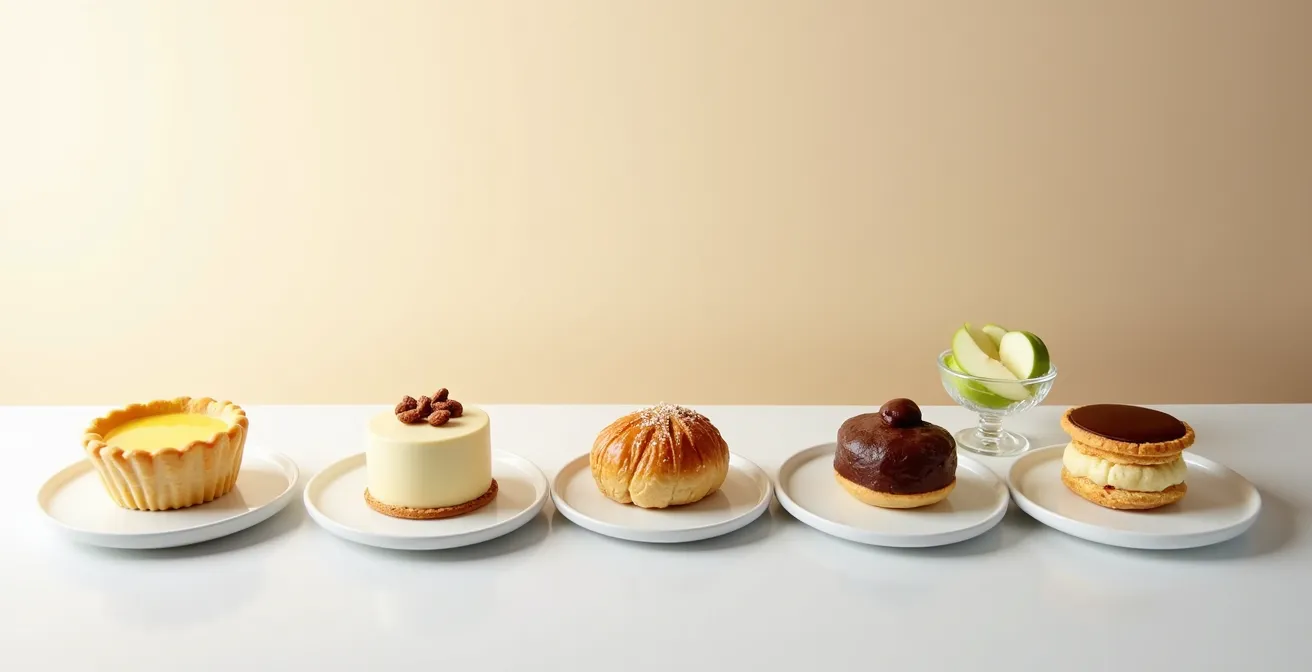
As the illustration demonstrates, this progression creates a visual and gustatory journey. For your tasting, you could start with a lemon tartlet, followed by an almond croissant, a caramel éclair, and finish with a small, intense dark chocolate truffle. This structure ensures that the delicate notes of the first pastry aren’t bulldozed by the last.
Natural Extracts vs Artificial Flavoring: Which One for High-End Pastry?
When selecting pastries on a budget, you will inevitably encounter the difference between natural and artificial flavorings. While artificial options are cheaper, they are the primary reason why many mass-produced desserts taste one-dimensional and leave a lingering chemical aftertaste. A high-end experience, even on a budget, hinges on understanding this distinction and choosing wisely. The difference lies in molecular complexity.
As celebrated chef Cédric Grolet explains in his masterclass, the magic of gourmet pastry comes from its evolving, multi-layered taste profile. This is something only natural ingredients can provide.
Natural fruit extracts contain hundreds of aromatic compounds, creating a layered, evolving flavor that is the hallmark of gourmet pastry.
– Cédric Grolet, Pastry Class Online Masterclass
Artificial flavorings, by contrast, typically consist of just one or a few dominant molecules that mimic the main scent of an ingredient. An artificial strawberry flavor might taste vaguely of “strawberry,” but it lacks the subtle green, floral, and tart notes of the real fruit. This is why it often feels “flat” or “fake.” When planning your budget, it is far better to have one or two smaller pastries made with real butter, vanilla bean, and fruit purée than a platter of larger, cheaper items that rely on artificial substitutes.
The following table, based on a scientific breakdown of aroma in baked goods, clearly illustrates the difference. When shopping, look at ingredient lists—if you see “artificial flavor” or “vanillin” instead of “vanilla extract,” you know you are sacrificing complexity for cost.
| Aspect | Natural Extracts | Artificial Flavoring |
|---|---|---|
| Aromatic Compounds | 100+ complex molecules | 1-5 isolated molecules |
| Flavor Evolution | Multi-layered, evolving | Linear, static |
| Aftertaste | Clean, fading naturally | Chemical, lingering |
| Cost Impact | Higher initial cost | Lower cost |
| Quality Perception | Premium, artisanal | Mass-produced |
The Flavor Pairing Mistake That Ruins a Gourmet Dessert Platter
Beyond the order of service, the composition of the dessert platter itself is critical. The most common amateur mistake is a lack of variety—specifically, repeating the same base flavor or texture. A platter with a chocolate tart, a chocolate mousse, and a chocolate lava cake may sound like a dream for a chocoholic, but in a tasting context, it’s a recipe for disaster. The palate quickly becomes desensitized, and all three desserts begin to taste the same.
The key to a dynamic and engaging platter is contrast and cohesion. You need a variety of flavors (sweet, tart, bitter) and textures (creamy, crispy, chewy) that play off one another. This isn’t just a matter of professional opinion; it’s backed by consumer science. For instance, a global taste survey found that 73% of consumers prefer desserts with contrasting textures. The interplay between a silky cream and a crunchy nut, or a soft cake and a crisp meringue, is what creates excitement and keeps the palate engaged.
Cohesion is achieved by using a “bridge ingredient”—a single component that appears in different forms across two of the pastries, tying the flavor narrative together. For example, a hint of lemon in a madeleine could connect to a more prominent lemon curd in a tartlet later in the flight. This creates a subtle, elegant throughline for your guests to discover.
To put this into practice, follow a few simple rules used by professional pastry chefs when designing dessert menus. This checklist will help you build a balanced and exciting platter every time.
Action Plan: Composing a Professional Dessert Platter
- Assess your selections: Never repeat the same base flavor more than once (e.g., avoid a chocolate tart and a chocolate mousse).
- Inventory textures: Ensure your platter includes at least three different textures, such as something crispy (sablé), creamy (panna cotta), and chewy (macaron).
- Identify a bridge: Find a “bridge ingredient” to use in different forms across two pastries for cohesion (e.g., almond in a frangipane tart and as a toasted garnish on another item).
- Check for balance: Balance predominantly sweet elements with at least one tart (fruit-based) or bitter (dark chocolate, coffee) component.
- Plan for temperature contrast: If possible, mix room-temperature items with one or two slightly chilled components to add another layer of sensory experience.
When to Serve Dessert: The Perfect Timing for Maximum Gastronomic Emotion
Just as important as *what* you serve and *how* you serve it is *when* you serve it. The default is to bring out dessert immediately after the main course plates are cleared. However, this timing can significantly dull the experience. After a savory, often heavy meal, the palate is fatigued and the body is already signaling fullness. Serving a complex, delicate pastry at this moment is like trying to appreciate a whisper in a noisy room.
High-end restaurants and professional tasting panels have long understood this. An analysis of service timing reveals a crucial insight: a 30 to 60-minute “digestive lull” after the main course dramatically enhances dessert appreciation. This pause allows the palate to reset from savory flavors like garlic, herbs, and salt, and gives the stomach time to settle. When dessert is finally served, the senses are far more receptive to the sweet, delicate notes of the pastry.
Even more compelling, studies on sensory acuity have pinpointed the ideal time of day for tasting. According to a report on flavor trends, mid-afternoon tastings between 3 and 4 PM consistently show the highest sensory acuity scores. At this time, our senses are at their peak, unburdened by a heavy meal. This makes a compelling case for reframing your pastry tasting not as an after-dinner afterthought, but as a standalone event in the late afternoon, perhaps paired with tea or coffee.
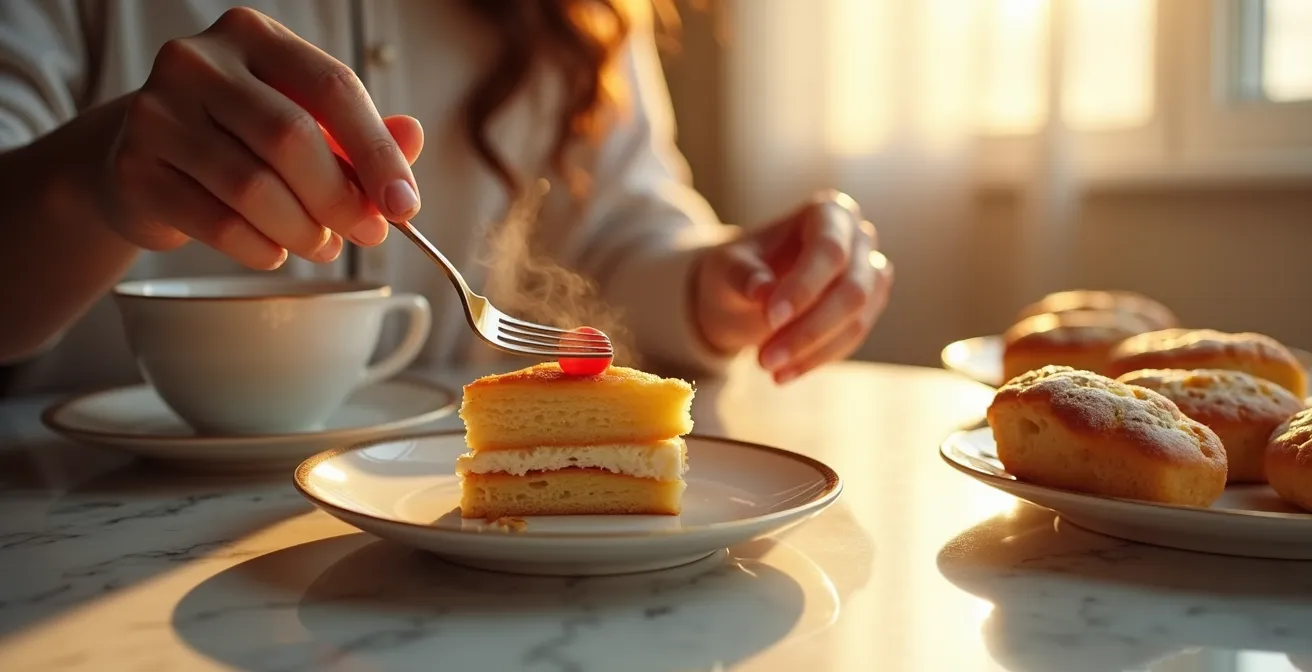
Consider the ambiance suggested by an afternoon service: the soft, golden-hour light, a relaxed pace, and the ability to give the pastries your full, undivided attention. By simply shifting the time of your event, you create an environment where the subtle complexities of your carefully chosen pastries can truly shine, generating maximum gastronomic emotion.
How to Design a Menu That Tells a Personal Story?
A gourmet tasting is more than a collection of flavors; it’s an experience. The most memorable events are those that tell a story, connecting the food to a theme, a place, or a personal memory. This narrative element transforms your guests from passive eaters into active participants in a culinary story you’ve crafted. You don’t need a grand theme; even a simple, personal concept can create a powerful and cohesive experience.
There are several techniques to weave a story into your menu:
- The Flavor Journey: Take your guests on a geographic tour. For example, a “Morning in Provence” theme could feature a lavender madeleine, a bright lemon tart, and a traditional almond calisson. A small, simple map on the menu card can enhance this concept.
- The Ingredient Spotlight: Choose one key ingredient and showcase its origin story. If you’re featuring Valrhona chocolate, a few sentences about its origin in a small Venezuelan village adds immense depth and appreciation.
- The Themed Name: Give your pastries evocative names that create anticipation, like “Grandmother’s Secret Apple Tart” or “First Date Chocolate Mousse.” A brief, two-sentence narrative explaining the personal connection makes the experience intimate and unique.
One of the most creative ways to tell a story is by deconstructing a classic dessert. This interactive approach allows guests to taste the individual components before combining them, giving them a newfound appreciation for the whole.
Case Study: The Deconstructed Black Forest Cake Tasting
A home baker hosted a tasting centered on their favorite dessert: the Black Forest cake. Instead of serving slices, they presented the core components separately. Guests were given a small square of high-quality dark chocolate, a spoonful of kirsch-macerated cherries, a dollop of fresh vanilla whipped cream, and a piece of airy chocolate sponge. They tasted each element individually to understand its unique contribution before being invited to combine them in a single spoonful, creating an interactive “aha!” moment as the familiar flavor of the classic cake came together on their palate.
Why You Can’t Taste Coffee Notes When Your Nose is Blocked?
Have you ever noticed that when you have a cold, food tastes bland and uninteresting? You can still perceive basic sensations like sweet, salty, and sour on your tongue, but all the complex, defining flavors—the “raspberry” in a jam or the “cinnamon” in a bun—disappear. This phenomenon reveals a fundamental truth of gastronomy: the majority of flavor is actually perceived through your sense of smell, through a process called retronasal olfaction.
When you chew food, you release its volatile aromatic compounds. These molecules travel up from the back of your throat into your nasal cavity. It is here, not on your tongue, that your brain identifies the complex notes of coffee, vanilla, fruit, or spices. Your tongue only provides the five basic tastes (sweet, sour, salty, bitter, umami) and texture. Without your nose, a strawberry and a cherry would taste almost identical: just “sweet.”
Flavor experts often use a simple, powerful experiment to demonstrate this. Participants are asked to taste a complex pastry, like a coffee-chocolate éclair, while pinching their nose. In this state, they report tasting only sweetness and creaminess. But the moment they release their nose, they experience what feels like a “flavor explosion” as the trapped coffee and chocolate aromas rush into their nasal passages, instantly revealing the pastry’s true identity.
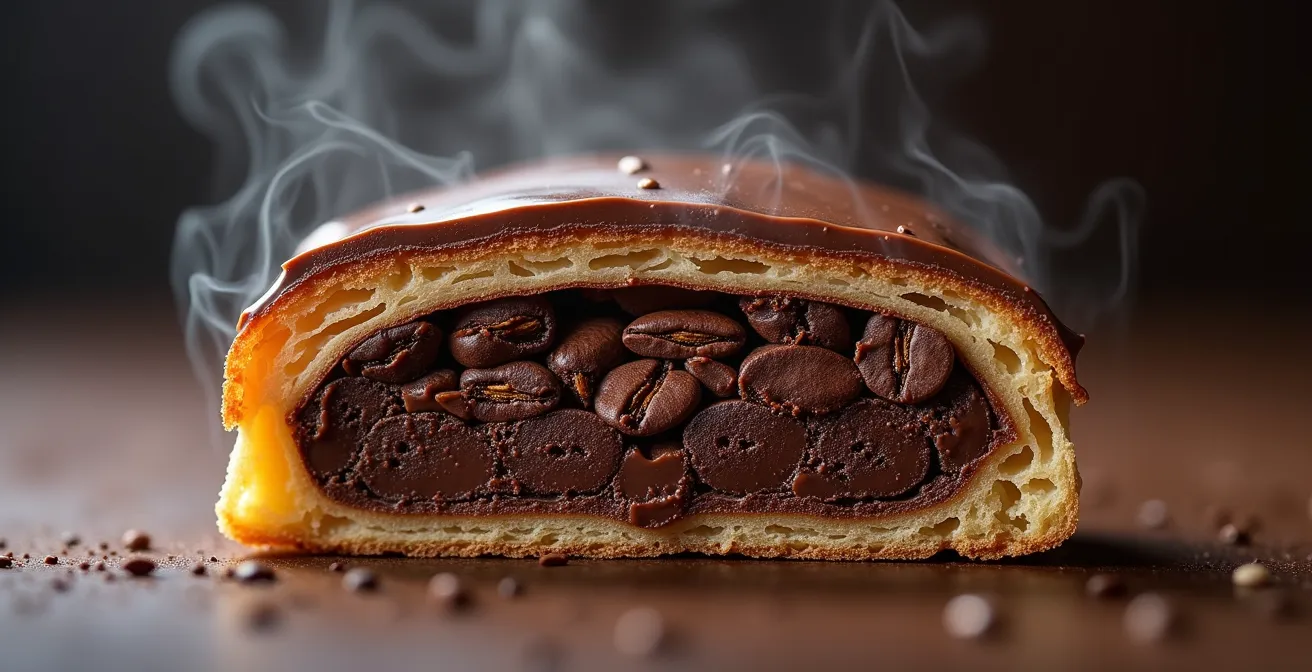
Understanding this concept is crucial for a host. It reinforces the importance of serving pastries at the correct temperature to maximize aromatic release. It also encourages you to prompt your guests to take a moment to savor the aroma before their first bite. This simple act of conscious smelling primes the brain and dramatically enhances the entire tasting experience, making them more aware of the intricate layers you’ve presented.
Key Takeaways
- Temperature is Flavor: Always serve pastries slightly below room temperature (around 60-65°F or 15-18°C) to allow their aromatic compounds to be fully released.
- Order is Everything: Structure your tasting from light/acidic flavors to rich/complex ones to prevent palate fatigue and create a logical flavor journey.
- Contrast Creates Excitement: A successful platter must include a variety of textures (creamy, crispy, chewy) and a balance of flavors (sweet, tart, bitter).
How to Host a Coffee and Chocolate Pairing Party Like a Pro?
As a final, advanced application of all these principles, consider hosting a tasting dedicated to one of gastronomy’s most classic pairings: coffee and chocolate. This theme provides a perfect framework for exploring the concepts of complementary and contrasting pairings. A complementary pairing involves matching similar flavor profiles—for example, a nutty Brazilian coffee with a hazelnut praline chocolate. The notes in each component amplify the same notes in the other.
A contrasting pairing, on the other hand, involves using two very different profiles to create balance. A bright, highly acidic Kenyan coffee can cut through the richness of a dense, dark brownie, with each element highlighting the other’s unique qualities. A third strategy is the “terroir match,” where you pair a coffee and a chocolate that originate from the same geographical region, such as a fruity Ethiopian coffee with a single-origin 70% dark chocolate from nearby Madagascar. This allows guests to taste the unique flavor characteristics of a specific part of the world.
When you find a truly exceptional match, something magical can happen. As one food educator notes, the right combination can create an entirely new flavor that doesn’t exist in either component alone. This is the ultimate goal of a pairing tasting.
A perfect pairing can create a ‘third flavor’ that doesn’t exist in either the coffee or chocolate alone – like discovering rum-raisin notes from combining fruity coffee with earthy chocolate.
– Anya Zelfond, Craft Chocolate & Food Educator
By applying the principles of temperature control, flavor progression, and storytelling to a coffee and chocolate theme, you can host a sophisticated event that is both educational and deeply enjoyable. It’s the perfect showcase for your newfound skills in sensory orchestration.
You now have the complete professional playbook. Start planning your own sensory journey, apply these simple but powerful techniques, and transform your next gathering into an unforgettable culinary event that will have your guests talking for weeks.