Training your coffee palate is not an abstract art but a trainable skill based on systematically isolating your sensory inputs.
- Most of what you perceive as “flavor” is actually aroma detected through the back of your throat, a process called retronasal olfaction.
- You can learn to distinguish specific acidities (like the sharpness of lemon versus the roundness of apple) using simple kitchen ingredients as a baseline.
Recommendation: Start with the “jellybean experiment” detailed in the first section. It’s a simple, powerful way to experience firsthand the crucial link between your nose and your ability to taste.
You’ve spent good money on a bag of specialty coffee. The label promises an explosion of “blueberry, jasmine, and citrus.” You brew it with care, take a sip, and taste… coffee. It’s a familiar frustration for many enthusiasts. You know the flavors are supposed to be there, but detecting them feels like trying to see a secret message without the decoder ring. This gap between the promise on the bag and the reality in your cup can be disheartening, making you wonder if you’re just not cut out for this.
You’ve likely heard the common advice: “just taste more coffee,” “use a flavor wheel,” or “learn to slurp.” While well-intentioned, this advice often misses the fundamental point. It’s like being told to appreciate a painting by just staring at it longer. Without understanding the principles of color, composition, and light, you’re only seeing the surface. True appreciation, and in our case, true tasting, requires a more structured approach.
But what if the key wasn’t about memorizing a wheel of abstract terms, but about systematically rewiring your brain’s sensory pathways? The secret to unlocking the complex flavors in your coffee lies not in tasting more, but in tasting smarter. It’s about breaking down the singular experience of “flavor” into its core components—aroma, acidity, and memory—and training your ability to perceive each one in isolation. This is the method professionals use, and it’s a skill anyone can learn.
This guide is your personal coaching session. We will move beyond generic tips and into practical, targeted exercises. We’ll explore the science of how your nose and brain work together to create flavor, learn to calibrate your palate to identify specific acidities, and use professional techniques adapted for your own kitchen. Prepare to turn your coffee routine into a deliberate sensory workout.
This article provides a structured training plan to develop your sensory skills. Follow the sections in order to build a solid foundation, from understanding the role of your nose to mastering advanced tasting strategies.
Summary: How to Train Your Palate and Finally Taste the Fruit Notes in Your Coffee
- Why You Can’t Taste Coffee Notes When Your Nose is Blocked?
- How to Set Up a Triangular Cupping Session in Your Kitchen?
- Citric vs Malic Acidity: How to Tell Lemon from Apple Notes?
- The Dietary Mistake That Ruins Your Coffee Tasting Ability
- Which Coffee to Taste First: Light Roast or Dark Roast?
- Why Taste Recalls Memories More Vividly Than Sight?
- Why You Can’t Learn Smell Recognition from a Book?
- Is a Professional Tasting Workshop Worth the Investment?
Why You Can’t Taste Coffee Notes When Your Nose is Blocked?
If you’ve ever tried to enjoy a meal with a stuffy nose, you already know the answer: it tastes like cardboard. This isn’t an illusion; it’s a biological fact. Your tongue is only capable of detecting five basic tastes: sweet, sour, salty, bitter, and umami. Every other nuance—the “blueberry” in an Ethiopian coffee or the “chocolate” in a Brazilian one—is not a taste, but an aroma. These aromas are perceived through a process called retronasal olfaction, where aromatic compounds travel from your mouth up to your nasal cavity through the back of your throat.
The science is clear: research shows that retronasal olfaction is responsible for up to 80% of what we perceive as flavor. When your nose is blocked, this pathway is shut down, and you’re left with only the basic sensations your tongue can provide. This is why professional cuppers slurp coffee so forcefully; it’s not for show, but to aerate the coffee and propel those volatile aromatic compounds into the nasal passage, maximizing flavor perception. To truly understand this, you must experience it.

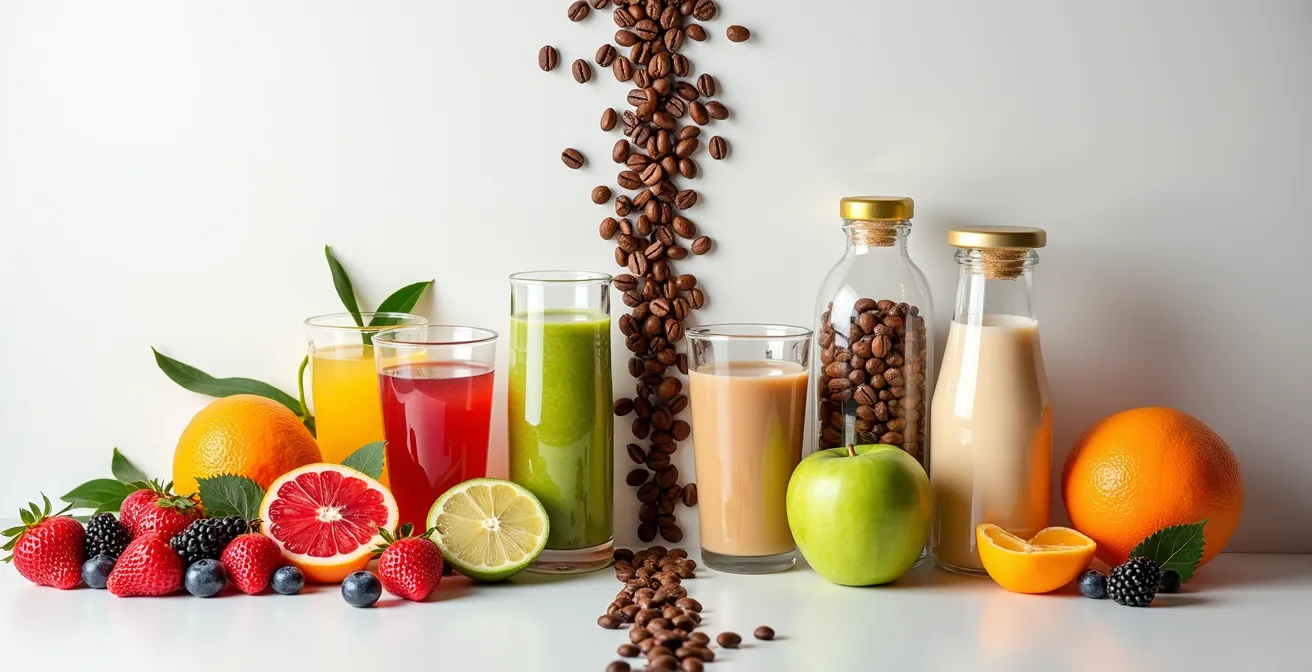
As this image suggests, tasting is a multi-sensory experience where the mouth and nose are in constant communication. The following exercise, a classic in sensory training, will make this connection tangible for you.
- Step 1: Take a jellybean and pinch your nose completely shut.
- Step 2: Begin chewing the jellybean while keeping your nose closed. You should only notice a generic sweetness or sourness. The specific flavor is absent.
- Step 3: While still chewing, suddenly release your nose.
- Step 4: Experience the “explosion” of a specific flavor (cherry, lime, etc.) as retronasal olfaction kicks in and your brain receives the aromatic data.
- Step 5: Repeat this process with a sip of coffee to understand just how much of its perceived flavor profile is dependent on a clear nasal passage.
How to Set Up a Triangular Cupping Session in Your Kitchen?
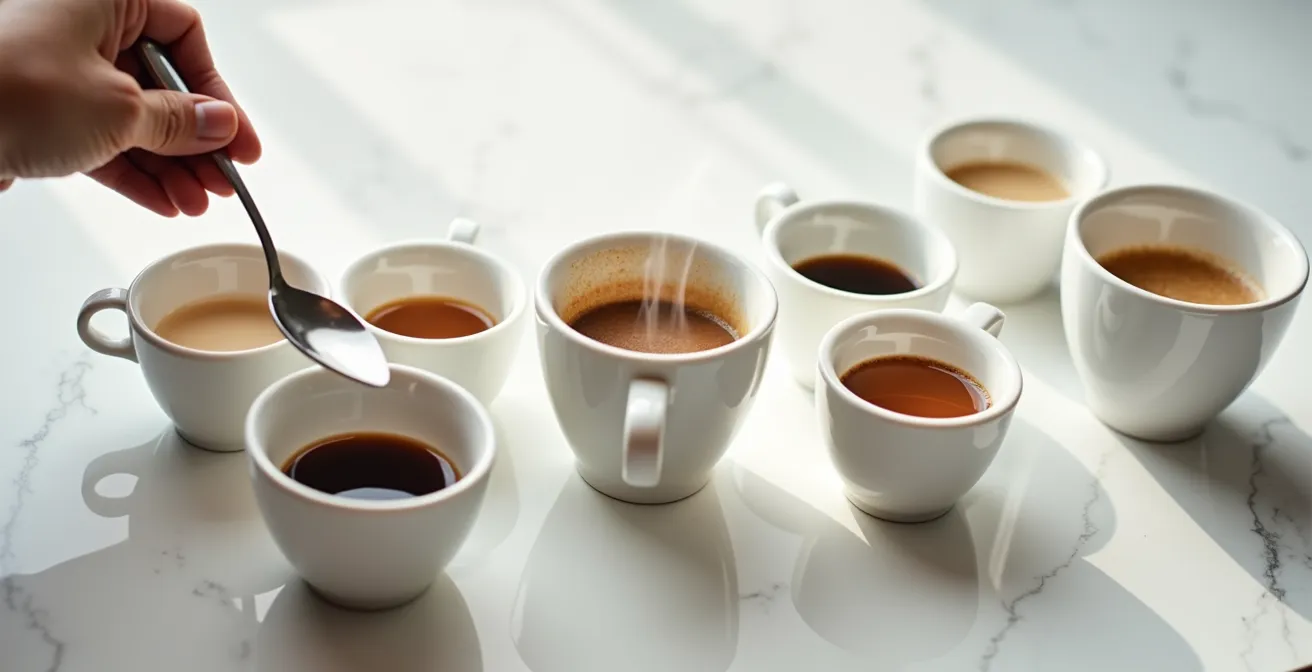
Once you understand that flavor is primarily aroma, the next step is to sharpen your ability to detect subtle differences. The most effective way to do this is through triangulation. Think of it as a workout for your palate. In its simplest form, you prepare three cups of coffee, two of which are identical and one that is different. Your task is to identify the “odd one out.” This exercise forces your brain to move beyond passive tasting and engage in active, comparative analysis.
Professional Q graders use what’s called the Progressive Triangulation Method to build sensory acuity. They start with high-contrast comparisons (e.g., a bright, floral Ethiopian coffee versus an earthy, heavy-bodied Sumatran) and progressively decrease the difference. This methodical approach trains the palate to pick up on increasingly subtle variations. You can easily replicate this at home to start your training journey, using different coffees or even by altering a single brewing variable.
The following table, inspired by professional cupping protocols described by sources like guides on improving your palate, breaks down how you can structure your own triangulation sessions to match your skill level. The goal isn’t just to be “right,” but to articulate *why* the one cup is different.
| Difficulty Level | Coffee Selection | Variable to Change | Skill Developed |
|---|---|---|---|
| Beginner | Ethiopian vs. Brazilian vs. Ethiopian | Different origins | Basic flavor profile recognition |
| Intermediate | Same farm, different processing | Washed vs. Natural | Processing impact detection |
| Advanced | Same coffee in all cups | 5°C water temp difference | Brewing variable sensitivity |
| Expert | Same lot, different roast dates | Freshness (1 week apart) | Temporal flavor changes |
Start at the beginner level. As you get more confident in identifying the odd cup, move to the intermediate level. The real learning happens when you can not only identify the different cup but also describe the specific sensory difference you detected.
Citric vs Malic Acidity: How to Tell Lemon from Apple Notes?
For many new tasters, “acidity” is a daunting word, often confused with “sourness” or seen as a negative quality. In specialty coffee, however, acidity is a desirable trait that gives the brew its brightness, vibrancy, and complexity. The key is to understand that not all acidity is the same. Just as there are different types of fruit, there are different types of acids in coffee, each with a unique sensory footprint. The two most common are citric and malic acidity.
Think of citric acid as the bright, sharp, mouth-watering quality you find in lemons, limes, and oranges. It often presents as a focused, zesty sensation on the sides of your tongue. Malic acid, on the other hand, is the softer, rounder, and smoother acidity found in green apples, pears, and stone fruits. It tends to be perceived more broadly across the entire palate. Learning to distinguish between these two is a major breakthrough in your ability to identify fruit notes. Specific coffee origins often correlate with certain acid types; for instance, research on coffee origins reveals that Central American washed coffees show citric acidity in a high percentage of samples, while many East African coffees display more malic characteristics.
The best way to learn the difference is not by reading, but by tasting. This simple calibration exercise will anchor the distinct feelings of citric and malic acid in your sensory memory.
- Prepare two reference solutions: One glass with water and a few drops of fresh lemon juice (citric), another with water and a small amount of pure, unsweetened green apple juice (malic).
- Taste the lemon water first. Notice the ‘sharp’, ‘focused’ prickling sensation on the sides of your tongue. This is your reference for citric acid.
- Rinse your mouth with plain water and wait 30 seconds.
- Taste the apple water. Pay attention to the ‘broader’, ‘softer’ sensation that coats more of your palate. This is your reference for malic acid.
- Practice with coffees. Now, taste a coffee known for its acidity (a washed Guatemalan or Kenyan, for example) and try to identify which of your reference solutions its acidity most closely resembles.
The Dietary Mistake That Ruins Your Coffee Tasting Ability
When trying to improve their palate, many coffee enthusiasts focus on what to avoid right before a tasting session—spicy foods, mint, or garlic. While this is sound advice, the biggest dietary mistake is far more insidious and chronic: a diet high in processed foods. The constant bombardment of artificial flavor enhancers, excessive sugar, and high sodium levels effectively desensitizes your taste buds over time. It raises your sensory threshold, making it incredibly difficult to detect the delicate, subtle, and natural flavors found in high-quality coffee.
This isn’t just anecdotal. The “Processed Food Palate Phenomenon” is a recognized issue in sensory science. As described in materials from training resources like Coffee On Cue, which references a World Coffee Research study, participants with diets high in processed foods showed significantly reduced ability to detect nuanced flavors. The study found that even a short “clean-eating” period of just two weeks could dramatically improve flavor detection ability. It’s like turning down the background noise so you can finally hear the music.
Another often-overlooked factor is simple hydration. Your ability to taste is directly linked to saliva production, which acts as a solvent for flavor compounds. As the Pacific Coffee Research team emphasizes in their training materials:
Being even mildly dehydrated can thicken saliva and alter its chemical composition, significantly impairing the tongue’s ability to perceive tastes accurately. The mistake is not hydrating properly throughout the day, not just before a tasting session.
– Pacific Coffee Research Team, Sensory Training Workshop Materials
To give yourself the best chance at tasting clearly, the goal is to maintain a “clean palate” not just for an hour, but as a general state. This means prioritizing whole foods and staying consistently hydrated throughout the day.
Which Coffee to Taste First: Light Roast or Dark Roast?
The order in which you taste coffees has a significant impact on your perception, a phenomenon known as “palate fatigue” or “sensory carryover.” Tasting a bold, roasty dark roast first can overwhelm your senses, making it nearly impossible to detect the delicate floral and fruit notes in a light roast tasted afterward. So, the simple answer is to generally taste from light to dark. However, a sensory coach will tell you that the “right” order depends on your training objective.
Instead of following a single rule, think of tasting order as a strategic choice. Are you trying to appreciate the unique character of a specific origin? Or are you trying to understand the impact of the roasting process itself? Each goal might call for a different sequence. This approach moves you from being a passive consumer to an active analyst, using tasting order as a tool to deconstruct flavor.
The following table outlines three common strategies for ordering your tasting. Each serves a different purpose and helps develop a specific sensory skill.
| Strategy | Order | Purpose | Best For |
|---|---|---|---|
| Preserving Sensory Nuance | Light → Medium → Dark | Protect delicate origin notes from being overwhelmed | Detecting subtle fruit and floral notes |
| Roast Profile Deconstruction | Dark → Medium → Light | Isolate roast character to identify origin notes | Learning to “subtract” roast impact |
| Baseline Method | Medium → Light → Medium → Dark | Use a familiar medium as a palate reset | Comparing extremes with a reference point |
For a beginner focused on identifying fruit notes, the Preserving Sensory Nuance strategy is the best place to start. It protects your palate’s sensitivity. As you become more advanced, experimenting with the other strategies can provide new insights. For example, the “Roast Profile Deconstruction” method, while counter-intuitive, can be a powerful exercise in learning to taste “through” the roast to find the underlying origin characteristics.
Why Taste Recalls Memories More Vividly Than Sight?
Have you ever caught a whiff of a certain food and been instantly transported back to your childhood kitchen? This is the “Proustian phenomenon,” and it’s not a quirk of nostalgia; it’s a matter of neuroanatomy. Your sense of smell (olfaction) is unique among all your senses because of its direct and unfiltered connection to the brain’s emotional and memory centers. While signals from your eyes and ears are first routed through the thalamus—the brain’s logical switchboard—smell takes a direct highway.
As neuroscience research confirms, the olfactory bulb has a direct pathway to the amygdala (the emotion processing center) and the hippocampus (the memory hub). This is why a smell or a taste can trigger such a powerful and immediate emotional and memory recall, far more vividly than seeing a photograph. When you taste “blueberry” in a coffee, you’re not just identifying a flavor; you’re activating a complex network of memories and emotions associated with every blueberry you’ve ever eaten.
This is the secret weapon of professional tasters. They don’t just build a vocabulary; they build a library of sensory memories. You can train this skill using a technique called Memory Anchoring. It’s about consciously forging a stronger, more personal neural connection to a flavor note. Instead of just thinking “this tastes like strawberry,” a trained taster actively links that sensation to a specific, vivid personal memory, like “the taste of wild strawberries picked on a summer hike.”
This technique, as outlined in professional training guides, improves flavor recall by creating multiple retrieval pathways in the brain. The flavor is no longer just an abstract concept; it’s anchored to a rich, multi-sensory personal experience. To practice this, the next time you taste a distinct note in your coffee, don’t just name it. Close your eyes and ask yourself: “What does this specifically remind me of?” The more detailed and personal the memory, the stronger the anchor will be for future tastings.
Why You Can’t Learn Smell Recognition from a Book?
A flavor wheel can give you the word “jasmine,” and a book can describe it as “a sweet, heady, white floral aroma.” You can read that description a hundred times, but until you have physically smelled a jasmine flower, the word remains an empty, abstract symbol. This is the essence of the Symbol Grounding Problem, a concept from cognitive science that is crucial to sensory training.
The problem states that a symbol (a word like “lychee” or “cardamom”) has no intrinsic meaning. Its meaning is “grounded” only when it is connected to a real-world sensory experience. As author Jessica Easto explains in her book ‘How to Taste Coffee’, you cannot learn flavor from a list. The book itself, despite being a book, is filled with exercises that require the reader to go out and physically smell and taste reference materials, from different types of fruits to various spices. This is the only way to build a reliable sensory library in your brain.
Professional training programs take this principle to its logical conclusion. The Specialty Coffee Association’s (SCA) Sensory Skills courses, for example, are built around hands-on practice. They use professional aroma kits, like the Le Nez du Café, which contain dozens of vials of real, isolated chemical compounds responsible for the aromas found in coffee. Students spend hours smelling these references, then trying to find them in actual coffee samples. This repetitive, physical act of smelling the reference and then finding it in the coffee is what grounds the symbol to the sensation.
The takeaway for the home enthusiast is simple: you must be an active explorer of the world of aroma. Go to the grocery store and smell fresh herbs. Buy an unfamiliar fruit and spend time analyzing its aroma and taste. The more real-world sensory data points you can collect and consciously catalog, the larger and more reliable your internal flavor library will become. A flavor wheel is a map, but it’s useless if you’ve never visited the places it depicts.
Key Takeaways
- Flavor is 80% Smell: The most crucial principle is understanding that complex flavors are aromas perceived through retronasal olfaction, not just tastes on your tongue.
- Isolate and Calibrate: Don’t try to taste everything at once. Isolate variables like acidity and roast level, and use real-world references (like lemon juice or apples) to calibrate your palate.
- Connect Taste to Memory: To make flavor identification robust and repeatable, consciously link a detected note to a specific and vivid personal memory.
Is a Professional Tasting Workshop Worth the Investment?
After weeks of practicing triangulation and calibrating your palate, you may find yourself hitting a plateau. You can tell coffees apart, but you still struggle to name the specific notes with confidence. This is often the point where coffee enthusiasts consider a professional workshop. But is it worth the significant investment of time and money? The answer depends entirely on where you are in your sensory journey.
A workshop offers two things that are difficult to replicate at home: calibrated feedback and access to a wide range of coffees and equipment. Having an experienced instructor taste a coffee alongside you and provide immediate, expert feedback (“What you’re calling ‘sour’ is actually the malic acidity we discussed”) can be the catalyst for a major breakthrough. It helps you correct misinterpretations and fine-tune your sensory vocabulary.
However, the return on investment (ROI) is not the same for everyone. A complete beginner might be better served by attending free public cuppings at a local roaster to learn the basics. Conversely, a highly advanced taster might find a general workshop too basic. The highest value is often found by the intermediate enthusiast who has hit a specific roadblock. The following analysis, based on the structure of programs like the SCA’s Coffee Skills Program, can help you decide if it’s the right time for you.
| Skill Level | Workshop Value | Cost-Benefit | Alternative Options |
|---|---|---|---|
| Beginner | Medium | $200-400 for basics you could self-learn | Free cuppings at local roasters |
| Intermediate Plateau | Highest | $400-800 for breakthrough guidance | Limited – this is optimal timing |
| Advanced | Low-Medium | $600-1200 for marginal gains | Q Grader certification instead |
| Professional | Specialized only | $1000+ for specific skills | Industry-specific training |
If you decide a workshop is the right next step, you need a strategy to maximize its value. Simply showing up is not enough. Going in with a plan will ensure you leave with tangible skills, not just a caffeine buzz.
Your Action Plan for a Coffee Workshop
- Before: Set a specific learning goal. Don’t just go to “learn more.” Aim for something concrete, like “I want to confidently distinguish a washed from a natural process coffee by taste.”
- Before: Prepare questions. Write down the specific challenges you face. “I always confuse under-extraction sourness with bright acidity. How can I tell them apart?”
- During: Focus on vocabulary. Listen intently to how the instructor and other experienced tasters articulate flavors. If they use a word you don’t understand, ask for clarification.
- During: Take detailed notes. Document how the experts’ descriptions differ from your own for the same coffee. This is where you’ll find your blind spots.
- After: Solidify the learning. Immediately after the workshop, purchase a bag of the most memorable coffee you tasted and practice identifying those same notes at home within 48 hours.
The journey to developing a discerning palate is a marathon, not a sprint. It’s a deeply personal process of building a sensory library, one coffee at a time. Start today by choosing one exercise from this guide—whether it’s the jellybean experiment or the acidity calibration—and perform it with intention. The flavors are waiting for you.