
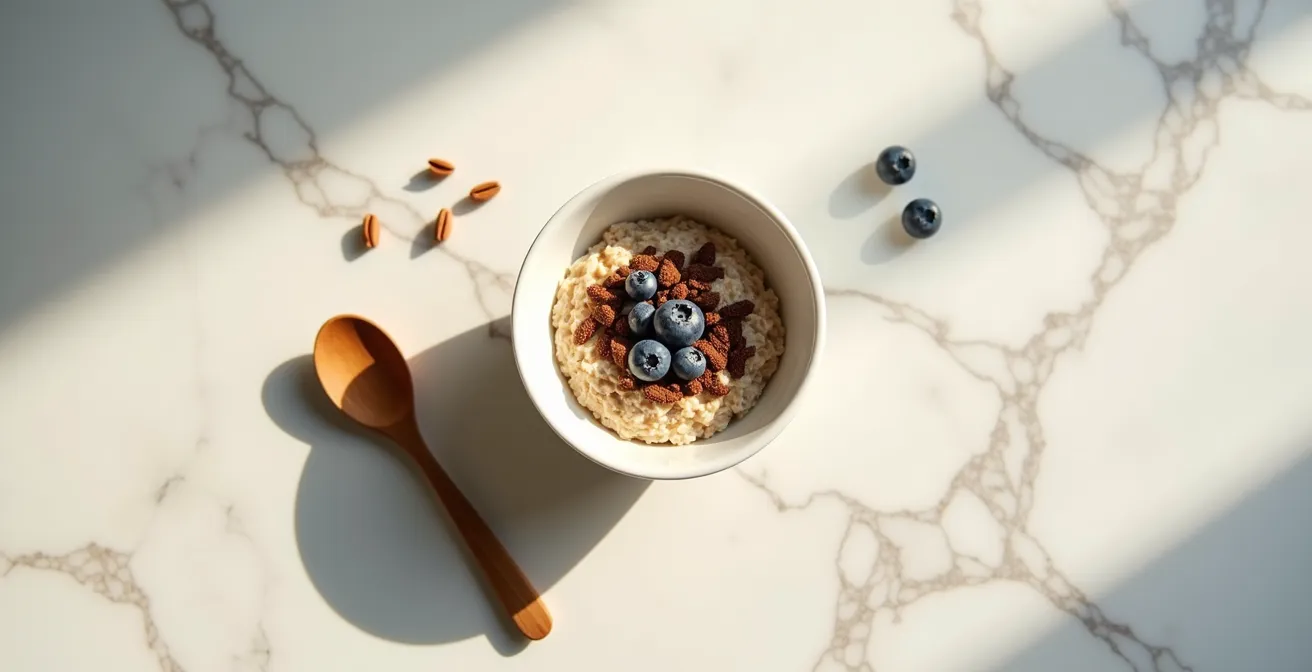
The secret to unlocking the full power of cocoa nibs isn’t just sprinkling them on your bowl—it’s understanding how to manipulate their unique chemistry for maximum health and flavor.
- Minimal processing is key: Raw nibs contain significantly more protective antioxidants (flavanols) than processed chocolate.
- Bitterness is a feature, not a flaw: The “dirt” taste comes from clashing tannins, which can be neutralized with the right pairing of fat, salt, or acidity.
Recommendation: For general wellness and enjoying the synergistic benefits of a ‘whole food,’ high-cacao dark chocolate or, even better, cocoa nibs are superior to supplements. Start by tasting raw and roasted nibs side-by-side to understand their fundamental differences in flavor and texture.
If you’re looking to elevate your breakfast from merely filling to functionally nutritious, cocoa nibs are a wellness powerhouse hiding in plain sight. Many people see them as a crunchy, slightly bitter alternative to chocolate chips and simply sprinkle them over oatmeal or yogurt. While that’s a good start, this approach barely scratches the surface of their potential. This common use overlooks the intricate nutritional science that makes cocoa nibs a true superfood, rich in fiber, minerals, and potent antioxidants.
The usual advice—”add a sweetener to mask the bitterness”—is a missed opportunity. It treats the nib’s complex flavor as a problem to be solved rather than a characteristic to be understood and balanced. The real magic happens when you move beyond the sprinkle and start thinking like a food scientist. Understanding the difference between raw and roasted nibs, how heat affects their antioxidant content, and the chemistry of flavor pairing is what transforms them from a simple topping into a strategic ingredient for boosting your health.
This guide will take you beyond the platitudes. We will explore the “why” behind the “how,” revealing that the key to unlocking the benefits of cocoa nibs lies not in masking their nature, but in mastering their chemistry. We’ll delve into how to preserve their delicate nutrients, manage their intense flavor profile, and strategically incorporate them into your meals to truly boost the fiber and antioxidant content of your breakfast bowls. You’ll learn to make informed choices that align with your specific wellness goals, whether that’s maximizing antioxidant intake, improving mineral absorption, or simply creating the most delicious and texturally satisfying breakfast possible.
To guide you through this journey of flavor and function, we’ve structured this article to answer the most critical questions about incorporating cocoa nibs into your diet. From understanding their nutritional superiority to mastering their use in the kitchen, each section builds upon the last to give you a complete and holistic understanding.
Summary: Mastering Cocoa Nibs for Your Wellness Routine
- Why Cocoa Nibs Contain More Antioxidants Than Dark Chocolate?
- How to Soften Cocoa Nibs for Baking Without Losing Crunch?
- Raw vs Roasted Nibs: Which is Better for Magnesium Absorption?
- The Pairing Mistake That Makes Cocoa Nibs Taste Like Dirt
- When to Add Nibs to Oatmeal: Cooking vs Topping?
- Cocoa Extract Pills vs Dark Chocolate: Which is More Bioavailable?
- Why Green Beans Have No Caramel Flavor Until 170°C?
- High Blood Pressure: Can Daily Cocoa Consumption Lower Your Numbers?
Why Cocoa Nibs Contain More Antioxidants Than Dark Chocolate?
The primary reason cocoa nibs pack a greater antioxidant punch than most dark chocolate comes down to one word: processing. Nibs are simply crushed, fermented, and dried cocoa beans, representing one of an ingredient’s most unrefined, whole-food forms. This minimal processing is crucial for preserving their rich concentration of flavanols, a powerful class of antioxidants. The most notable of these is epicatechin, which is celebrated for its benefits to cardiovascular health and cognitive function.
Dark chocolate, on the other hand, undergoes several additional heating and refining steps, including “conching” and often “Dutching” (alkalization). Each of these stages can degrade the delicate flavanol compounds. In fact, research shows that the journey from raw bean to finished chocolate bar can be nutritionally devastating. Studies confirm that raw cacao nibs retain 60-80% more epicatechin than conventionally processed cocoa powder or chocolate. The difference is even more stark with alkalized cocoa.
The “Dutch processing” method, used to reduce bitterness and create a darker, richer color, is particularly destructive to antioxidants. When cocoa is alkalized, its epicatechin content can plummet by up to 90%. What starts as a potent source of 10-15 mg of epicatechin per tablespoon in its raw form can end up as a mere 1-3 mg in a heavily processed product. Therefore, by choosing cocoa nibs, you are choosing the form closest to nature, ensuring you receive the maximum dose of these protective compounds with every bite.
How to Soften Cocoa Nibs for Baking Without Losing Crunch?
One of the biggest challenges when using cocoa nibs in baked goods like cookies or muffins is their intense hardness. Incorporating them directly into a batter can result in unpleasantly hard pellets. However, softening them too much can destroy their signature crunch, leaving you with a mushy texture. The key is to find a balance by controlling hydration and protecting their structural integrity.
Instead of a long, texture-destroying soak, a more strategic approach is needed. There are three effective techniques a home baker can use to achieve the perfect balance of a softened exterior and a crunchy core. These methods manipulate how moisture and fat interact with the nibs during the baking process, allowing you to have both deep flavor and delightful texture.
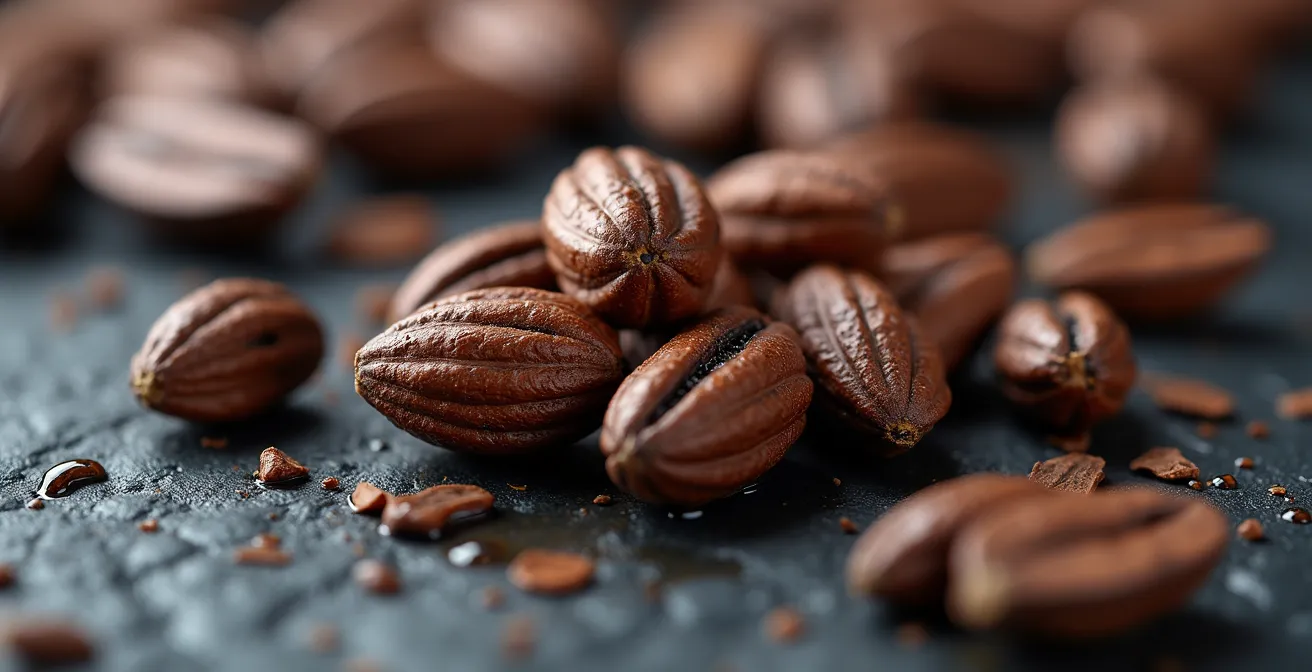
As the image above illustrates, cocoa nibs have a complex, crystalline structure. The goal is to gently hydrate the outer layers while keeping the core intact. Here are the methods to achieve this:
- Controlled Hydration: Soak the nibs in a hot liquid like coffee, espresso, or simply warm water for a very specific duration—no more than 5-10 minutes. This brief window is enough to soften the outer shell without turning the entire nib to mush. Drain them well before adding to your batter.
- Fat-Coating: Before incorporating them into your recipe, toss the nibs in a small amount of melted fat, such as coconut oil or cocoa butter. This creates a hydrophobic barrier that shields the nibs from excess moisture in the batter, preventing them from becoming soggy during baking.
- Partial Crushing: Use a mortar and pestle or the flat side of a knife to gently crush about half of your nibs. This creates textural variety: the finer pieces and powder will disperse their chocolatey flavor throughout the batter, while the larger pieces remain to provide that satisfying crunch.
Raw vs Roasted Nibs: Which is Better for Magnesium Absorption?
The choice between raw and roasted cocoa nibs isn’t just about flavor; it’s a nutritional trade-off, particularly concerning mineral absorption and antioxidant content. Both forms are excellent sources of magnesium, a vital mineral for muscle function, nerve health, and energy production. However, how our bodies access that magnesium is influenced by other compounds within the nibs, which are in turn affected by roasting.
Raw nibs contain higher levels of phytic acid, an anti-nutrient that can bind to minerals like magnesium, zinc, and iron in the gut, potentially reducing their bioavailability (the amount your body can actually absorb and use). The roasting process helps to break down some of this phytic acid, which may lead to slightly better mineral absorption. On the flip side, the heat from roasting degrades some of the heat-sensitive flavanol antioxidants. The following table breaks down the key differences:
| Factor | Raw Nibs | Roasted Nibs |
|---|---|---|
| Magnesium Content | 272mg/100g | 268mg/100g |
| Phytic Acid Level | Higher (binds minerals) | Lower (better absorption) |
| Flavanol Content | Maximum preserved | Reduced by 20-40% |
| Flavor Profile | Bitter, astringent | Nutty, chocolatey |
As this comparative analysis of roasted and unroasted cocoa highlights, the decision depends on your primary wellness goal. If your main objective is to maximize your intake of powerful antioxidants like epicatechin, raw nibs are the clear winner. If you are more focused on mineral intake and prefer a less bitter, more complex nutty flavor, roasted nibs are the superior choice. As a holistic nutritionist, I often recommend using a mix of both to get the benefits of each.
Prioritize raw for maximum flavanol content (antioxidants). Prioritize roasted for potentially better mineral bioavailability and a deeper, less bitter flavor profile.
– Research synthesis, Roasted and Unroasted Cocoa Nibs Study
The Pairing Mistake That Makes Cocoa Nibs Taste Like Dirt
One of the most common complaints about cocoa nibs is their intense bitterness, sometimes described as an earthy or even “dirt-like” taste. This isn’t an issue of quality; it’s a matter of chemistry. This unpleasant flavor emerges from a classic pairing mistake: failing to balance the nibs’ high concentration of tannins. Tannins are naturally occurring compounds that create an astringent, mouth-puckering sensation. When nibs are paired with other tannin-rich ingredients (like certain teas or under-ripe fruits) or are consumed without balancing elements, the result is an overwhelmingly bitter and dry experience.
The solution is not to simply drown them in sugar, but to use flavor science to counteract the tannins. A successful pairing requires a combination of sweetness, salt, and fat or creaminess. Sweetness from fruits like bananas, mangoes, or berries directly counters the bitterness. A pinch of salt works wonders by suppressing our perception of bitterness and amplifying the deeper chocolate notes. Finally, fat from sources like yogurt, avocado, or coconut cream coats the palate, softening the astringent effect of the tannins and creating a much more pleasant mouthfeel.
Beyond these basics, you can use other flavor bridges and compounds to elevate your cocoa nib experience and neutralize any harshness. Here is a practical checklist to fix or prevent that unwanted bitter taste.
Your Action Plan: Fixing Bitter Cocoa Nibs
- Balance with Acidity: Add a squeeze of lime or lemon juice. The bright acidity cuts through excessive bitterness and brightens the overall flavor profile.
- Build Flavor Bridges: Include ingredients like vanilla extract, cinnamon, or orange zest. These share aromatic compounds with cocoa and help to create a more cohesive and rounded flavor.
- Leverage Sweet and Salty: Don’t just add sweetness (like honey or maple syrup); always include a tiny pinch of sea salt. This combination is key to suppressing bitterness and enhancing the rich chocolate notes.
- Incorporate Creaminess: Blend nibs into a smoothie with avocado or top a bowl of full-fat Greek yogurt. The fat content physically mellows the astringent sensation.
- Choose Complementary Fruits: Pair with naturally sweet and low-tannin fruits like ripe bananas, cherries, or berries to provide a sweet counterpoint.
When to Add Nibs to Oatmeal: Cooking vs Topping?
For oatmeal lovers, the timing of when to add cocoa nibs is a surprisingly contentious topic. Do you cook them into the oats for a deeper, infused flavor, or sprinkle them on top at the end for maximum crunch? This decision impacts not just the final texture and taste of your breakfast bowl, but also its nutritional profile. As a nutritionist, I encourage a mindful approach that aligns with your desired outcome.

Adding nibs at the beginning of the cooking process allows their flavor to melt and infuse the entire bowl, creating a rich, homogenous chocolatey taste. The heat softens them considerably, which may be preferable for those who find them too hard. However, this prolonged exposure to heat will inevitably lead to some loss of the heat-sensitive flavanol antioxidants.
Conversely, using nibs as a topping at the very end is the best way to preserve both their signature crunch and their full antioxidant content. This method provides a wonderful textural contrast to the soft, creamy oatmeal. For those seeking the biggest nutritional bang for their buck, this is the superior method. But what if you want the best of both worlds? The “hybrid” method offers an elegant solution. The following table breaks down your options.
| Method | Best For | Result | Nutrient Impact |
|---|---|---|---|
| Cook In (Start) | Flavor infusion | Soft texture, chocolate throughout | Some flavanol loss from heat |
| Topping (End) | Texture & nutrients | Crunchy contrast | Maximum flavanol preservation |
| Hybrid Method | Best of both | Deep flavor + crunch | Balanced nutrient retention |
The Hybrid Method involves stirring half of your desired amount of nibs (or even better, cocoa powder) into the oatmeal as it cooks to build a deep flavor base. Then, sprinkle the remaining whole nibs on top just before serving. This gives you the rich, infused chocolate taste throughout the bowl while still providing that satisfying crunch and a final dose of preserved nutrients.
Cocoa Extract Pills vs Dark Chocolate: Which is More Bioavailable?
As the wellness world increasingly recognizes the power of cocoa flavanols, a new question arises: is it better to get these compounds from a whole food source like dark chocolate or nibs, or from a concentrated cocoa extract supplement? The answer depends entirely on the goal. It’s a classic case of therapeutic intervention versus holistic wellness.
Cocoa extract supplements are designed for targeted, medicinal effects. They provide a standardized, reliable, and high dose of specific flavanols, particularly epicatechin. This is crucial for clinical research and for individuals seeking to achieve a specific physiological outcome, such as lowering blood pressure under medical guidance. For instance, the landmark COSMOS trial used a standardized dose of 500 mg of cocoa flavanols per day, including 80 mg of epicatechin—a precise amount that would be difficult and inconsistent to obtain from chocolate alone.
However, for general health and wellness, whole food sources like high-cacao dark chocolate and especially cocoa nibs are often the superior choice. They offer a synergistic blend of not just flavanols, but also fiber, healthy fats, and essential minerals like magnesium and iron. This “food matrix” can influence how the body absorbs and utilizes the nutrients, providing a more holistic benefit. As the researchers behind the COSMOS trial themselves note, the choice is context-dependent.
For targeted therapeutic effects (e.g., blood pressure) under medical guidance, a standardized extract is more reliable. For general wellness and enjoying synergistic ‘whole food’ benefits, high-cacao dark chocolate or nibs are superior.
– COSMOS Research Team, COcoa Supplement and Multivitamin Outcomes Study
In essence, if you are working with a practitioner to address a specific health issue, an extract may be recommended. But for daily dietary enhancement and enjoying the full, complex benefits of cocoa, sticking with the whole food is the best path forward.
Why Green Beans Have No Caramel Flavor Until 170°C?
The intriguing title hints at a fundamental truth about cocoa: in their raw state, nibs can have a vegetal, slightly acidic, and even “green” flavor profile, much like an unroasted coffee bean. The rich, nutty, and caramel-like notes we associate with chocolate are not inherent; they are created through heat. This magical transformation is due to a famous chemical process known as the Maillard reaction, which only kicks into high gear at specific temperatures.
The Maillard reaction is a complex cascade of chemical changes between amino acids (from proteins) and reducing sugars that occurs when food is heated. It’s responsible for the delicious browning and flavor development in everything from seared steak to toasted bread. In cocoa nibs, this reaction begins to happen in earnest around 170°C (340°F). At this temperature, the precursor compounds in the raw nibs are transformed, creating hundreds of new aromatic molecules that give roasted nibs their characteristic nutty, toasty, and deeply chocolatey flavor profile.
Simultaneously, the heat also causes epimerization reactions in the epicatechin, slightly altering its structure and reducing the overall astringency. This is why roasted nibs are generally less bitter and more palatable than their raw counterparts. You can easily perform this transformation at home to create a more complex flavor for your breakfast bowls. Here’s a simple guide to home-roasting.
- Preheat your oven or a dry skillet to a medium heat, around 160-170°C (320-340°F).
- Spread the raw cocoa nibs in a single, even layer on a baking sheet or in the pan.
- Roast for 5-12 minutes, stirring or shaking the pan halfway through to ensure even cooking.
- Use your nose! The most important tool is your sense of smell. You will notice the aroma change from slightly bitter and green to a rich, nutty, and unmistakably chocolatey scent. That’s the Maillard reaction in action.
- Remove the nibs from the heat as soon as you smell this change to prevent them from burning. Let them cool completely before use.
Key Takeaways
- The nutritional value of cocoa is highest in its least processed forms. Nibs are superior to most chocolate for antioxidant content.
- Flavor and nutrition are a trade-off: choose raw nibs for maximum antioxidants and roasted nibs for better mineral absorption and a smoother, nuttier taste.
- Balance is everything: Counteract the natural bitterness of nibs not just with sugar, but with a strategic combination of fat, salt, and acidity.
High Blood Pressure: Can Daily Cocoa Consumption Lower Your Numbers?
Beyond their role in a crunchy breakfast, cocoa nibs and their flavanols have been the subject of serious scientific investigation for their therapeutic potential, particularly regarding cardiovascular health. One of the most well-studied benefits is their impact on blood pressure. The answer from a growing body of evidence is a resounding yes: consistent, high-flavanol cocoa consumption can indeed help lower blood pressure numbers, especially in individuals with mild hypertension.
The mechanism is linked to epicatechin, which promotes the production of nitric oxide in the body. Nitric oxide is a vasodilator, meaning it helps to relax and widen blood vessels, allowing blood to flow more easily and thus reducing pressure against the artery walls. The results from clinical trials are compelling. A study focusing on high-dose cocoa flavanols found that consuming 1052 mg per day led to significant reductions in 24-hour systolic blood pressure by 5.3 mm Hg and diastolic blood pressure by 3.0 mm Hg after just six weeks.
While this dose is high and may be more easily achieved with a standardized extract, it demonstrates the powerful physiological effect of these compounds. The benefits extend beyond just blood pressure. The large-scale COSMOS trial, which studied the effects of daily cocoa flavanol supplementation over several years, revealed even broader cardiovascular protection. The study found a statistically significant 27% reduction in cardiovascular death among those taking the supplement. This underscores that incorporating flavanol-rich cocoa into your daily diet is a powerful strategy for long-term heart health.
Now that you’re armed with this deeper understanding, the next step is to consciously integrate these principles into your daily routine. Start experimenting with both raw and roasted nibs, practice the art of flavor balancing, and transform your breakfast into a delicious and powerful act of self-care.