
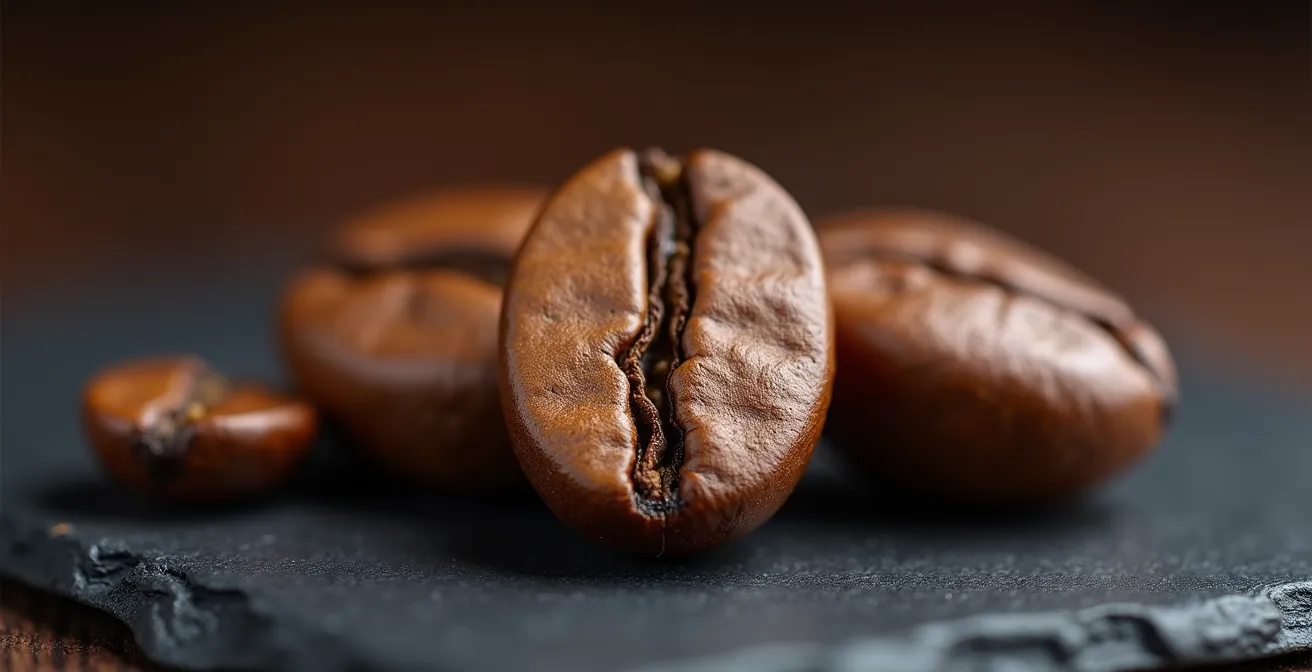
Contrary to popular belief, choosing a low-acidity coffee isn’t as simple as picking “100% Arabica.”
- High-quality Robusta can strategically reduce perceived acidity and enhance body in espresso blends.
- Terroir—specifically altitude and soil type—often has a greater impact on a bean’s final acidity than its species alone.
Recommendation: Focus on origin (e.g., Brazil, Sumatra), roast level (medium-dark to dark), and strategic blends over simplistic bean labels to find your ideal smooth espresso.
The morning ritual of a rich, aromatic espresso is a joy for many, but for those with a sensitive stomach, it can be a source of discomfort. The culprit is often perceived to be acidity, leading to a search for a “smoother” cup. The common advice is simple: avoid Robusta, stick to dark roasts, and look for the “100% Arabica” label as a seal of approval. This approach, however, overlooks the complex botanical and agricultural reality of coffee. It reduces a world of nuanced flavor and chemical composition to a binary choice.
From an agronomist’s perspective, the quest for low-acidity coffee is not a simple matter of choosing one species over another. It is a fascinating puzzle involving genetics, terroir, processing, and the art of the roaster. Factors like the mineral content of volcanic soil, the slow maturation of beans at high altitudes, and even a plant’s genetic resistance to disease all play a crucial role in shaping the final acidity of the brewed coffee. The “100% Arabica” promise can be misleading, as the quality and origin of that Arabica matter far more than the label itself.
This guide moves beyond the platitudes to explore the botanical truths behind coffee acidity. We will deconstruct the genetic differences between species, analyze how terroir shapes flavor, and reveal why a well-crafted blend—sometimes including a high-quality Robusta—can be the superior choice for a low-acidity, full-bodied espresso. This is your guide to understanding the bean from the soil to the cup, empowering you to make a truly informed choice for your palate and your comfort.
To navigate this complex botanical landscape, we have structured this guide to build your expertise from the ground up. You will learn to identify key characteristics of the beans themselves before exploring the environmental factors that define their potential.
Summary: A Botanical Deep Dive into Low-Acidity Coffee
- Why Arabica Has Half the Caffeine of Robusta Beans?
- How to Spot High-Grade Arabica Beans by Shape and Color?
- High-Altitude vs Low-Grown: Which Arabica is Sweeter?
- The “100% Arabica” Myth: Why It Doesn’t Guarantee Quality
- When to Lower Your Water Temp for Floral Arabica Roasts?
- Why Colombia Switched to Resistant Hybrids in the 80s?
- Why Volcanic Soil Produces Higher Acidity in Beans?
- The Coffee Belt: Why Latitude Determines Flavor Profile?
Why Arabica Has Half the Caffeine of Robusta Beans?
The fundamental chemical difference between Coffea arabica and Coffea canephora (Robusta) lies in their genetic makeup, which dictates their chemical defenses. Caffeine is a natural insecticide, and the Robusta plant, which typically grows in harsher, lower-altitude climates with more pests, evolved a more robust defense mechanism. As a result, Robusta beans contain significantly more caffeine. Analysis shows that on average, Robusta beans contain 2.7% caffeine while Arabica contains only 1.5%. This higher caffeine content contributes to Robusta’s characteristically bitter, rubbery flavor profile.
Beyond caffeine, Arabica beans possess nearly 60% more lipids and almost twice the concentration of sugars compared to Robusta. These sugars are essential for developing complex aromatic compounds during roasting, leading to the nuanced floral, fruity, and sweet notes for which Arabica is prized. Robusta’s lower sugar and lipid content result in a more straightforward, bold, and often “roasty” flavor. For those seeking low acidity, Arabica’s inherent chemical profile offers a better starting point, as its higher sugar content can be caramelized during roasting to balance and mask perceived acidity.
However, this doesn’t render Robusta useless for a low-acid cup. The Italian espresso tradition masterfully demonstrates the principle of synergistic blending. By incorporating a small percentage of high-quality “Fine Robusta,” roasters achieve a superior result that neither bean could produce alone.
Case Study: The Italian Blending Tradition
Italian espresso tradition demonstrates that blends containing 10-20% Fine Robusta with 80-90% high-grade Arabica create optimal low-acidity profiles. The Robusta enhances the crema’s thickness and stability and adds body, while the Arabica provides complex aromatic flavors. This results in a balanced espresso that minimizes perceived acidity by boosting richness and mouthfeel, a testament to the idea that a blend can be greater than the sum of its parts.
How to Spot High-Grade Arabica Beans by Shape and Color?
Identifying quality in unbrewed coffee beans is a primary skill for any coffee enthusiast. While Robusta beans are typically small, round, and have a straight center crease, high-grade Arabica beans have a distinct and more elegant appearance. They are noticeably more oval in shape, larger, and feature a characteristic sinuous ‘S’ shaped center crease. This physical distinction is the first and most reliable indicator of the bean’s species.
The quality of the roast is the next visual cue, especially for those seeking low acidity. A darker roast is not just about color; it’s a sign that the bean’s internal structure has undergone significant chemical transformation, breaking down the sharp organic acids. The image below illustrates the appearance of well-roasted Arabica beans suitable for a low-acidity espresso.
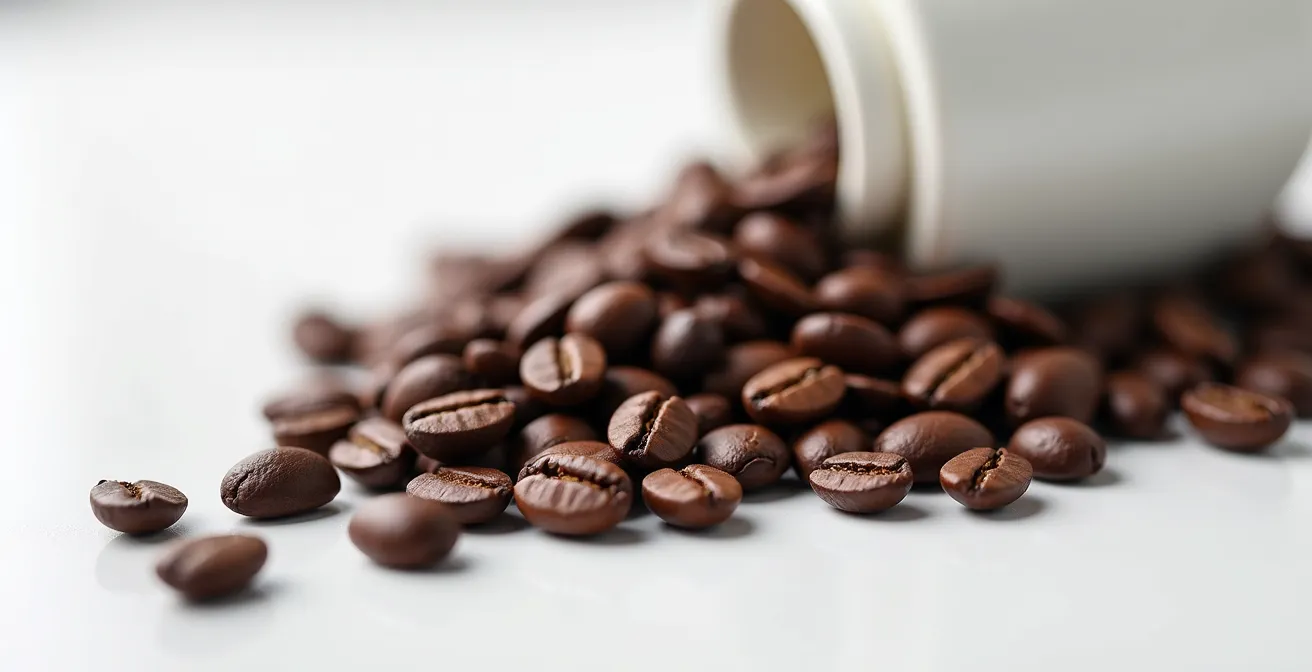
As you can see, the beans display a uniform, even color, which indicates a masterful roast where heat was applied consistently. A slight, velvety oil sheen on the surface is a good sign for medium-dark to dark roasts, showing that the internal lipids have migrated to the surface. However, excessively oily beans may be a sign of over-roasting or staleness. For a low-acid profile, you should actively avoid light roasts, which often appear dry, wrinkled, and pale, as they retain most of their bright, acidic compounds.
Action Plan: Visual Quality Audit for Low-Acidity Arabica
- Assess Roast Uniformity: Look for beans with an even, consistent roast color, which indicates proper heat distribution during the roasting process. Mottled or uneven coloring suggests a flawed roast.
- Evaluate Surface and Sheen: Check for medium-dark to dark roasts that present a smooth surface with a slight oil sheen. This is a sign that acids have been mellowed and sugars caramelized.
- Confirm Bean Morphology: Identify the characteristic oval shape and the pronounced, curved center crease that are hallmarks of the Arabica species.
- Avoid Underdevelopment Signs: Steer clear of light roasts that appear dry, wrinkled, and uneven in color. These beans retain a high concentration of the organic acids responsible for a sharp taste.
- Look for Origin Markers: When possible, seek out bags with altitude markers like ‘SHB’ (Strictly Hard Bean) or ‘SHG’ (Strictly High Grown), indicating slower maturation which develops more complex sugars to balance acidity.
High-Altitude vs Low-Grown: Which Arabica is Sweeter?
Altitude is one of the most significant factors in coffee agriculture, directly influencing a bean’s density, size, and chemical composition. Arabica beans grown at high altitudes (typically 1,200 meters and above) mature more slowly in the cooler, less oxygen-rich air. This extended maturation process allows the coffee cherry to develop a much higher concentration of complex sugars and lipids. The result is a harder, denser bean packed with the potential for nuanced, sweet, and vibrant flavor profiles. These are often labeled as SHB (Strictly Hard Bean) or SHG (Strictly High Grown).
Conversely, low-altitude Arabica beans mature faster in warmer climates, resulting in a less dense bean with a simpler sugar structure and inherently lower acidity. While this might seem ideal for a low-acid search, these beans often lack the complexity and sweetness that make a truly great cup of coffee. The magic lies in the potential of high-altitude beans. As a Coffee Chemistry Expert from the Espresso & Coffee Guide notes, the raw material is key:
High-altitude beans, with their high sugar content and complex acidity, are the perfect raw material. A skilled roaster can develop a roast profile that caramelizes the sugars and mellows the bright acids.
– Coffee Chemistry Expert, Espresso & Coffee Guide – Low Acid Coffee Analysis
The roaster’s job is to take the bright, complex acidity of a high-altitude bean—which might present as citric or malic acid—and transform it through caramelization into a deep, rich sweetness. The following table, based on data from coffee sourcing experts, breaks down this relationship between altitude and the final cup profile, highlighting how roast level is the key to unlocking low-acidity potential in high-quality beans.
| Altitude Range | Sweetness Level | Acidity Profile | Best for Low-Acid Espresso |
|---|---|---|---|
| 200-800m (Low) | Moderate | Low natural acidity | Good as-is |
| 800-1200m (Medium) | Balanced | Medium acidity | Requires medium-dark roast |
| 1200-2000m (High) | Very High | High complex acidity | Excellent with dark roast |
The “100% Arabica” Myth: Why It Doesn’t Guarantee Quality
The “100% Arabica” label is one of the most pervasive marketing tools in the coffee industry. It has been successfully positioned as an absolute guarantee of quality, leading consumers to believe that any coffee carrying this badge is inherently superior. While Arabica does have the genetic potential for more complex and delicate flavors, the label itself says nothing about the quality of the bean. In fact, research shows that while Arabica accounts for over 60% of global coffee production, a vast majority of it is commodity-grade, not specialty-grade.
A “100% Arabica” coffee can be grown at low altitudes, harvested improperly, processed poorly, and roasted inconsistently. The result will be a cup that is far inferior to a meticulously cultivated and processed Robusta. This is where the concept of “Fine Robusta” enters the conversation. These are Robusta beans grown and processed with the same care as specialty Arabica, offering a clean, full-bodied profile with low acidity and notes of chocolate and nuts, devoid of the rubbery off-flavors of their commodity counterparts. When used strategically in blends, they are not a “filler” but a powerful tool for enhancing the final espresso.
The idea that a blend is inherently inferior to a single origin is a misconception. Some of the world’s most revered espresso profiles are achieved through blending, proving that synergy often trumps purity.
Case Study: The Power of the 60/40 Blend
Premium Italian espresso brands have built their reputation on blends, some even using a 60/40 Arabica/Robusta ratio. These blends are celebrated for producing a superior espresso with a thick, stable, hazelnut-colored crema and a deep, balanced flavor. For low-acidity seekers, this approach is particularly beneficial. The Robusta component naturally lowers the blend’s overall acidity while significantly boosting its body and mouthfeel, creating a perception of smoothness and richness that a 100% Arabica blend might lack.
When to Lower Your Water Temp for Floral Arabica Roasts?
The question of water temperature during extraction is often misunderstood, especially when targeting low acidity. The intuitive thought is that lower temperatures might be gentler and extract less of everything, including acids. However, the chemistry of coffee extraction is more nuanced. Different compounds dissolve at different rates and temperatures. The bright, floral, and fruity notes associated with high-acidity, light-roast Arabicas are derived from delicate organic acids that are highly soluble and extract early in the brewing process, even at lower temperatures. Therefore, lowering your temperature for these beans will only accentuate their acidity, leading to a sour, underdeveloped shot.
For a low-acidity espresso, the goal is to achieve a full and balanced extraction, which requires higher temperatures. Hotter water (within the optimal range) is more effective at dissolving the heavier, less-soluble compounds that contribute to body, sweetness, and richness. This includes sugars that have been caramelized during a darker roast and lipids that create a viscous mouthfeel. This fuller extraction creates a more balanced cup where the perception of acidity is buffered by sweetness and body. An overly low temperature will fail to extract these balancing compounds, leaving the acidity unchecked.

As depicted, precision in temperature control is paramount. For achieving a rich, low-acid shot, particularly from a medium-dark or dark roast, aiming for the higher end of the standard espresso range is key. Here are the specific temperature guidelines to follow:
- Target Higher Temperatures: Use a standard to higher temperature range of 92-95°C (198-203°F) for your low-acidity espresso shots. This promotes the extraction of desirable solids and body-building compounds.
- Maximize Full-Bodied Extraction: Higher temperatures increase the solubility of heavier compounds, which contribute to the rich mouthfeel and sweetness that balance out any residual acidity.
- Avoid Lower Temperatures: Resist the urge to go lower. Cooler water preferentially extracts the lighter, more acidic compounds first, resulting in a sour and unbalanced espresso.
- Optimize for Dark Roasts: For dark roasts specifically, maintaining a temperature between 93-94°C (200-201°F) is often the sweet spot for maximizing sweetness without introducing roasty or bitter flavors.
- Monitor Extraction Time: Temperature works in tandem with time. Aim for a total extraction time of 25-30 seconds to ensure a well-balanced shot where all compound groups have been adequately extracted.
Why Colombia Switched to Resistant Hybrids in the 80s?
The story of Colombian coffee in the late 20th century is a powerful lesson in agronomic adaptation. For decades, Colombia was renowned for its traditional Arabica varieties like Typica and Bourbon. However, in the 1980s, the country’s coffee farms were devastated by Hemileia vastatrix, or coffee leaf rust, a fungus that decimates coffee plants. To save the industry, Colombia’s national coffee research center, Cenicafé, developed and promoted new, rust-resistant hybrid varieties, most notably Castillo and the aptly named Colombia variety. Today, Colombia stands out as a producer of exclusively 100% Arabica beans, a commitment sustained by these resilient cultivars.
This agricultural necessity had a profound and, for low-acid coffee drinkers, beneficial side effect on the coffee’s flavor profile. The switch was a pragmatic choice for plant survival, but it also changed the nature of the coffee itself. As a coffee history expert explains, this was a pivotal moment for the country’s flavor identity:
The switch to hybrids like Castillo and Colombia was a response to coffee leaf rust, but a side effect was a change in the cup profile: these hybrids are often naturally lower in acidity, with more body and notes of chocolate and nuts.
– Coffee History Expert, The Evolution of Colombian Coffee Varieties
These modern hybrids, which are crosses between Caturra and the Timor Hybrid (itself a natural cross of Arabica and Robusta), inherited Robusta’s disease resistance while retaining Arabica’s superior cup quality. More importantly, they express a flavor profile that is inherently less acidic and more full-bodied than the traditional varieties they replaced. This makes modern Colombian coffee an excellent and reliable choice for those seeking a balanced, sweet, and moderately acidic cup with classic notes of chocolate, caramel, and nuts.
Why Volcanic Soil Produces Higher Acidity in Beans?
The soil in which coffee is grown, its fundamental terroir, imparts a distinct chemical signature to the beans. Volcanic soil (Andosol), found in many of the world’s premier coffee regions like Guatemala, Kenya, and parts of Colombia, is prized for its fertility and excellent drainage. These soils are rich in minerals like phosphorus, which are readily available to the coffee plant. This mineral-rich environment promotes the development of the complex organic acids—such as citric, malic, and phosphoric acid—that create the bright, vibrant, and complex acidity coffee connoisseurs celebrate.
In contrast, coffees grown in lowland regions with clay-heavy soils, such as much of Brazil, have a different terroir expression. These soils tend to produce coffees that are naturally lower in acidity, with a heavier body and a flavor profile dominated by nutty and chocolatey notes. While delicious and excellent for a low-acid profile, they often lack the aromatic complexity of their volcanic-soil counterparts. The roaster’s challenge and art is to take the high potential of a volcanic-grown bean and transform its bright acidity into deep sweetness. The following table illustrates how soil type influences the final cup and the roasting strategy required.
| Soil Type | Region Example | Acidity Level | Flavor Profile | Roast Recommendation |
|---|---|---|---|---|
| Volcanic | Guatemala, Kenya | Very High | Bright, citric, complex | Medium-dark to dark |
| Clay/Lowland | Brazil | Low | Nutty, chocolatey | Any roast level |
| Mixed Highland | Colombia | Medium | Balanced, sweet | Medium to medium-dark |
The transformative power of roasting is not theoretical; it’s a measurable chemical process. A bean with high acidic potential is not a lost cause for a sensitive stomach; it is an opportunity for a skilled roaster.
Case Study: Taming Acidity Through Roasting
A 2024 comparison study analyzed coffees from Brazil (clay soil) and Guatemala (volcanic soil). The Brazilian beans consistently produced espresso with higher, less acidic pH levels of 5.2-5.3. The Guatemalan beans were initially much more acidic, registering pH levels of 4.8-5.0. However, when the Guatemalan beans were taken to a dark roast, their perceived acidity dropped to match the Brazilian levels. Crucially, they did so while retaining more of their complex fruit and floral notes, demonstrating how a dark roast can convert high “potential” acidity into low “actual” acidity without sacrificing flavor complexity.
Key Takeaways
- Acidity is primarily a function of terroir (altitude, soil) and roast level, not just the bean’s species. High-altitude Arabica, when dark-roasted, produces a sweet, low-acid cup.
- The “100% Arabica” label is not a guarantee of low acidity or high quality. A poorly grown Arabica is inferior to a well-cultivated “Fine Robusta.”
- Strategic blending with high-quality Robusta is a valid and often superior technique for creating a low-acidity, full-bodied espresso with excellent crema.
The Coffee Belt: Why Latitude Determines Flavor Profile?
The “Coffee Belt” refers to the equatorial regions between the Tropics of Cancer and Capricorn where virtually all of the world’s coffee is grown. Within this belt, a country’s latitude, combined with its typical altitudes and climates, creates distinct and predictable flavor profiles. This geographical reality is the ultimate synthesis of all the factors we’ve discussed: species, altitude, soil, and even tradition. For instance, Vietnam, a country at a lower latitude with a hot, humid climate, is perfectly suited for growing Robusta. It has become a powerhouse in its production, with recent data showing that Vietnam accounts for over 40% of global Robusta production.
For the low-acidity coffee seeker, navigating the Coffee Belt means knowing which origins are “safe bets” and which require more careful selection. Countries like Brazil and Sumatra (Indonesia) are renowned for producing coffees that are naturally low in acidity, with heavy bodies and earthy or chocolatey notes. In contrast, East African countries like Kenya and Ethiopia are famous for their intensely bright, acidic, and floral coffees, which may be challenging for a sensitive palate unless they have been specialty dark-roasted by an expert.
Your journey to the perfect low-acid espresso is a global exploration. It requires moving beyond simple labels and embracing the rich tapestry of coffee origins. By understanding the typical profile of each region, you can make an educated guess about the coffee’s character before you even taste it. Consider this a starting guide for your world tour of low-acidity coffee:
- Safe Bets (Brazil, Sumatra): Choose these origins for a guaranteed low-acidity experience, characterized by classic chocolatey, nutty, and earthy notes.
- Roast-Dependent (Colombia, Guatemala, Costa Rica): Select medium-dark to dark roasts from these regions to transform their natural moderate-to-high acidity into rich sweetness and complexity.
- Experts Only (Kenya, Ethiopia): Generally avoid these origins unless you are specifically seeking bright acidity or have access to a specialty dark roast explicitly marketed as low-acid.
- Robusta-Forward (Vietnam, India): Explore single-origin Fine Robusta or high-quality blends from these regions for an inherently low-acid, high-body profile.
- Processing Consideration: As a final tip, look for “Natural” or “Honey” processed coffees, as these methods tend to produce cups with a heavier body and lower perceived acidity compared to “Washed” coffees.
Armed with this botanical and agricultural knowledge, you are now equipped to be the curator of your own coffee experience. The path to a smooth, flavorful, low-acidity espresso is not about finding a single “magic bean,” but about appreciating the interplay of origin, roast, and blend. We encourage you to explore coffees from low-acid regions like Brazil or to seek out well-crafted blends from roasters who understand the art of balance. Start your journey of discovery today to find the perfect cup that delights your palate and respects your well-being.