
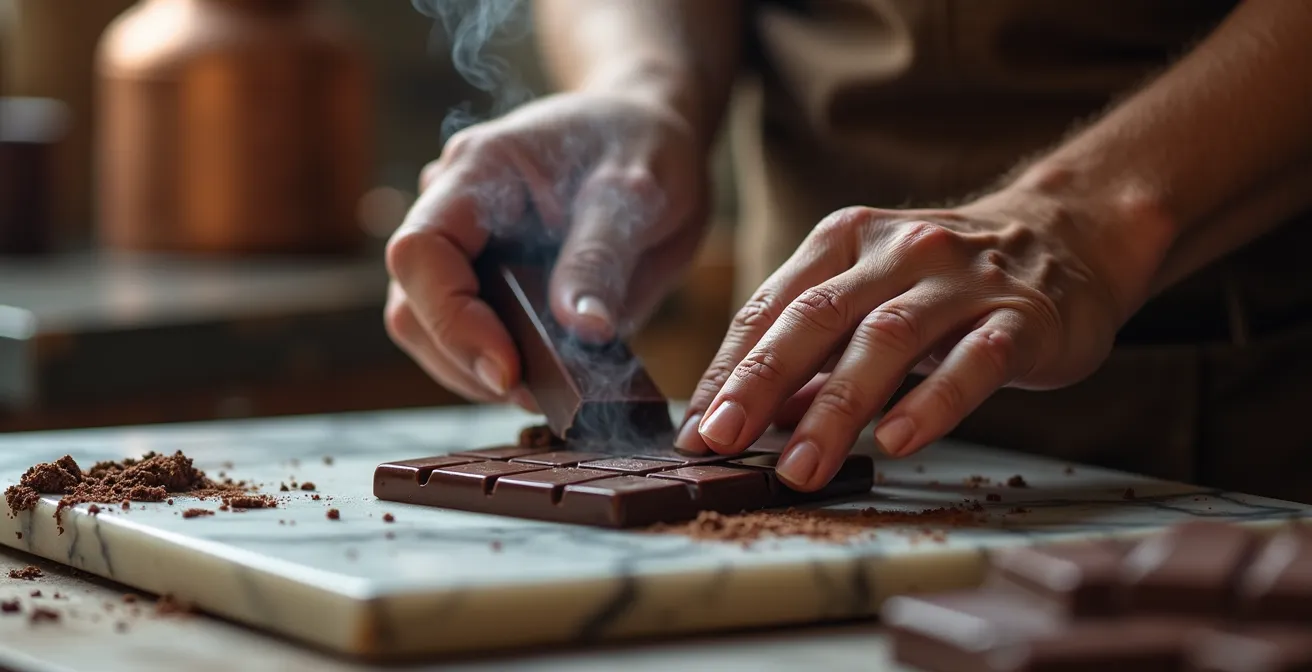
The high price of craft chocolate isn’t a luxury markup; it’s a transparent receipt for the real costs of ethical farming, meticulous processing, and unparalleled flavor integrity.
- Direct Trade models pay farmers a living wage, often 2-4 times the commodity price, directly funding community and agricultural improvements.
- Every step, from hand-sorting beans to using specialized storage bags, is a costly, deliberate choice to preserve the chocolate’s unique terroir.
Recommendation: Instead of seeing the price tag as a barrier, view it as an invitation to trace the story of value from the farm to the first bite.
You see it on the shelf: a beautifully wrapped chocolate bar priced at $10, maybe more. Right next to it, a familiar supermarket brand sells for a fraction of that cost. The immediate reaction is often sticker shock, followed by a simple question: why? It’s easy to dismiss the difference with vague notions of “better quality” or “fancy packaging,” but those explanations barely scratch the surface. The truth is far more compelling and is rooted in economics, ethics, and a profound respect for the cacao bean itself.
The story of that $10 bar is a story of de-commodification. It’s about a global movement of artisans—chocolate makers—who reject the industrial system that prioritizes volume over value. This system has long treated cacao as a faceless commodity, pushing prices down to levels where farmers can barely survive. The high price of a bean-to-bar chocolate isn’t an arbitrary markup. My angle is this: it’s a transparent receipt documenting a chain of deliberate, costly investments in human dignity, agricultural excellence, and flavor integrity that industrial chocolate is built to erase. It represents a completely different value system.
This guide will deconstruct that price tag for you. We will follow the bean from its origin on the farm, through the complex post-harvest process, and into the hands of the maker. By understanding the critical decisions made at each stage—from trade models to roasting profiles and even the type of bag used for shipping—you’ll see that the price reflects not an indulgence, but the true cost of creating something exceptional and equitable.
To fully understand the journey from a humble cacao bean to a premium chocolate bar, this article breaks down the key factors that contribute to its final cost. The following sections will guide you through the economic, agricultural, and artisanal decisions that define the world of craft chocolate.
Summary: Decoding the Cost of Craft Chocolate
- Why Direct Trade Pays Farmers 3x More Than Fair Trade?
- How to Taste the “Industrial Roast” in Cheap Chocolate?
- Madagascar vs Ecuador: Which Origin is Fruitier?
- The Labeling Trap: What “Sustainable Cocoa” Really Means
- Why a “Lot” Must Come from a Single Harvest Day?
- GrainPro vs Burlap: Which Bag Protects Flavor Better?
- When to Eat Dark Chocolate: Pre-Meal or Post-Meal?
- Chocolatier vs Chocolate Maker: What Is the Real Difference?
Why Direct Trade Pays Farmers 3x More Than Fair Trade?
The story of a chocolate bar’s price begins thousands of miles away, on a farm. The single biggest factor separating a $2 candy bar from a $10 craft bar is the economic model used to purchase the cacao beans. The mass market runs on the commodity price, an anonymous, fluctuating number that often traps farmers in poverty. For instance, a typical cocoa farming household in Côte d’Ivoire earns just about one-third of a livable income.
Certifications like Fair Trade emerged to address this, establishing a minimum price and a social premium. While well-intentioned, it’s not a perfect solution. After paying for certification, farmers sometimes earn less than the commodity price. More importantly, it still operates within the commodity framework. Direct Trade, the model preferred by craft makers, shatters this system. It involves building personal relationships with farmers and paying a significant premium based on quality, not a market floor. Craft makers often pay 2-4 times the commodity price for exceptional beans. This isn’t charity; it’s a quality-driven business transaction that provides farmers with the capital to invest in better fermentation and drying techniques, which in turn produce better-tasting beans. This creates a virtuous cycle of quality and prosperity, forming the ethical and financial foundation of the bar’s cost.
This table illustrates the stark economic differences between the models, showing how Direct Trade shifts the financial power back to the origin. This data highlights the real cost of ensuring a living wage for farmers and fostering agricultural excellence.
| Trade Model | Price per MT | Additional Benefits |
|---|---|---|
| Commodity Market | $2,500 | None |
| Fair Trade Minimum | $2,940 | Certification |
| Direct Trade Average | $4,000+ | Infrastructure investment, training |
This premium price is the first and most significant entry on that $10 “receipt,” representing a direct investment in the people who make chocolate possible.
How to Taste the “Industrial Roast” in Cheap Chocolate?
Once premium beans are ethically sourced, the chocolate maker’s first crucial task is roasting. This is where the bean’s latent flavors are awakened, and it’s a step that starkly divides industrial and craft chocolate. Large-scale manufacturers roast at very high temperatures for a short time. This “industrial roast” is efficient for processing massive, inconsistent batches of beans. Its goal is to obliterate any off-flavors from low-quality beans and create a uniform, one-dimensional “chocolatey” taste. This harsh process often damages the delicate cocoa butter, leading to a waxy texture and a need for additives like vanilla to mask the burnt notes.
Craft makers, however, approach roasting like chefs. They work with small, high-quality lots and develop a unique roast profile for each origin to highlight its inherent character—be it fruity, nutty, floral, or earthy. This is a form of deliberate inefficiency; it’s slower and requires immense skill, but it’s essential for preserving flavor integrity. The difference is not just theoretical; you can taste it. The texture of properly roasted chocolate is smoother, and the flavor evolves on your palate, telling the story of its origin. The image below contrasts the physical result of these two philosophies.
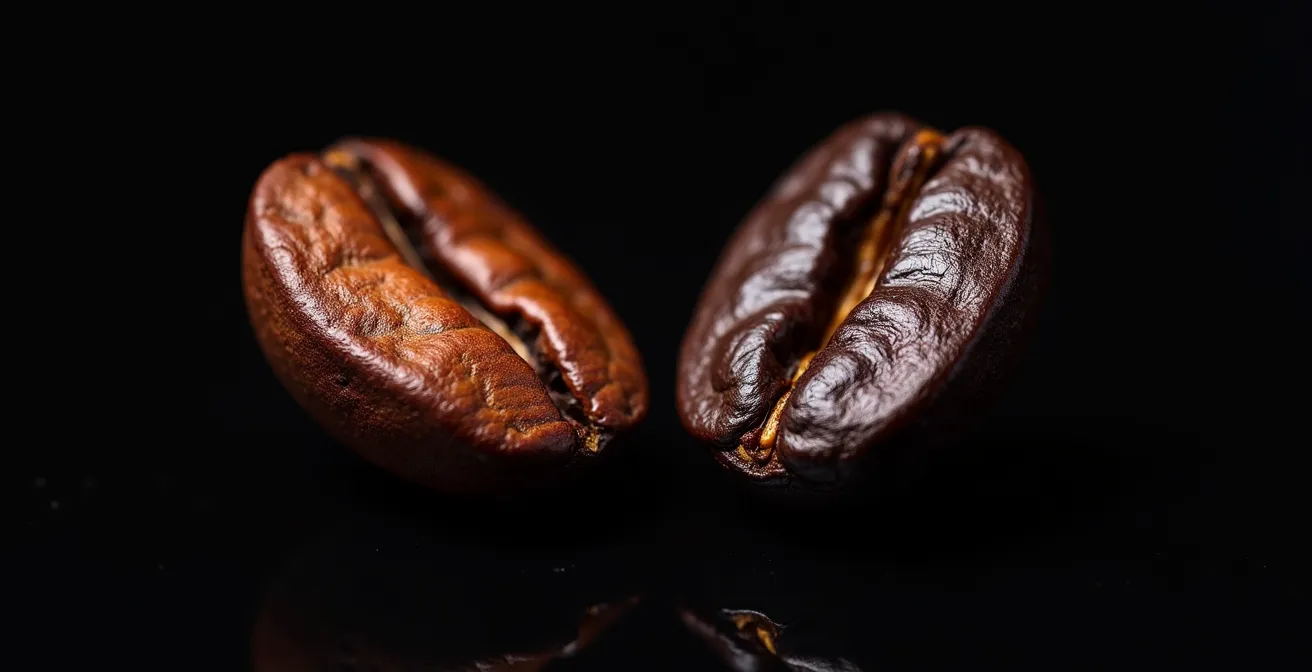
As you can see, the difference is visible even before tasting. The over-roasted bean is dull and charred, while the craft-roasted bean has a rich color and sheen, hinting at the carefully preserved fats and flavors within. This attention to detail contributes directly to the final cost but is responsible for the complexity that defines premium chocolate.
Your Action Plan: How to Identify an Industrial Roast
- Listen to the Snap: Break a piece. A clean, sharp snap indicates well-tempered chocolate made with stable cocoa butter. A dull thud often suggests an industrial process or additives.
- Analyze the Melt: Let a small piece melt on your tongue. Industrial chocolate often feels waxy and melts too quickly. Craft chocolate should melt smoothly and coat your palate.
- Track the Flavor: Note the flavor progression. Industrial chocolate hits with a single, flat “chocolate” note and then disappears. Craft chocolate should evolve, revealing multiple layers of flavor.
- Check for Off-Notes: Taste for burnt rubber, excessive bitterness, or an overpowering, artificial vanilla flavor. These are hallmarks of a process designed to mask poor-quality beans.
- Evaluate the Texture: Compare the mouthfeel. Over-roasting can damage cocoa butter, creating a gritty or sandy texture, a flaw you won’t find in meticulously crafted bars.
This sensory audit transforms you from a passive consumer into an active taster, capable of discerning the quality embedded in the bar.
Madagascar vs Ecuador: Which Origin is Fruitier?
The concept of “single origin” is central to craft chocolate, but it’s often misunderstood. Consumers might ask, “Which origin is fruitier, Madagascar or Ecuador?” thinking that geography is the sole determinant of flavor. While a bean’s genetics and terroir (the unique environment where it’s grown) provide the flavor potential, they don’t guarantee the final result. In fact, many experts agree that post-harvest processing and the maker’s skill are far more influential.
For example, while Trinitario beans from Madagascar are famous for their bright, red-fruit potential, poor fermentation can easily mute these notes, resulting in a dull and flavorless bar. Conversely, Ecuador is known for its floral and nutty Nacional beans, but a skilled farmer using specific fermentation techniques can bring out surprising and delightful fruit notes. This is why the blanket statement “Madagascar is fruity” is a dangerous oversimplification. The real magic—and a significant part of the cost—lies in the meticulous, often experimental, post-harvest work. This includes the duration and method of fermentation and drying, which are critical for developing the precursor compounds that a maker will later unlock during roasting. As the experts at Bean to Bar World note in an article for Science of Chocolate:
The final flavor is more dependent on the post-harvest process and the maker’s roast profile than just the origin.
– Bean to Bar World, Science of Chocolate
This understanding reframes the question entirely. Instead of asking which origin is fruitier, a more insightful question is, “How did this specific farmer and maker collaborate to express the potential of this bean?” That collaboration—a costly, time-consuming partnership to achieve a specific flavor profile—is what you are paying for. It’s the art and science of nurturing flavor from the soil to the bar, a process industrial chocolate completely bypasses.
Ultimately, the origin provides the canvas, but the farmer and the maker are the artists, and their expertise is a core component of the bar’s value.
The Labeling Trap: What “Sustainable Cocoa” Really Means
In an effort to make ethical choices, consumers often rely on labels. Words like “sustainable” and logos like Fairtrade have become mental shortcuts for responsible purchasing. The trust in these labels is remarkably high; according to 2023 research, a significant 72% of consumers trust the Fairtrade label. While these certifications have raised awareness, they can also function as a trap, creating an illusion of fairness that masks a deeply unbalanced system.
The term “sustainable cocoa” is often vague and defined by the corporations themselves. It may refer to environmental practices without addressing the economic unsustainability of paying farmers below-poverty wages. Even with a certification like Fairtrade, the fundamental structure of the supply chain remains the same. The value is overwhelmingly captured at the top. A stark report from Fairtrade International reveals that in the vast majority of cocoa supply chains, brands and retailers capture about 90% of the value, while a mere fraction—often as little as 7.5%—accrues to the farmers who grow the raw product. This is the core problem that many labels fail to solve.
Bean-to-bar chocolate offers a different path: economic transparency. Instead of relying on a seal of approval, craft makers provide information. They tell you the origin, the name of the farm or cooperative, and sometimes even the price they paid for the beans. Their entire business model is built on a direct, transparent value chain where a much larger share of the final price is reinvested at the source. This transparency is more powerful than any label because it empowers you, the consumer, to see exactly where your money is going. It’s a shift from trusting a logo to trusting a verifiable, short, and clear relationship between maker, farmer, and you.
The price of craft chocolate reflects this commitment to a transparent and more equitable distribution of value, a commitment that goes far beyond a simple sticker on the package.
Why a “Lot” Must Come from a Single Harvest Day?
In the world of commodity coffee or wine, the concept of a “lot” is well-understood. It refers to a specific batch of product from a particular place and time, possessing a unique character. Craft chocolate applies the same rigorous principle, and it’s another reason for the higher cost. For a chocolate maker, a lot doesn’t just mean beans from the same farm; ideally, it means beans harvested and fermented together, often on a single day. This obsession with consistency is fundamental to preserving the bean’s unique terroir.
Why such precision? Cacao fermentation is a delicate biological process. The mix of microbes, ambient temperature, and humidity all have a profound impact on the final flavor. Mixing beans from different harvest days—or even from the morning and afternoon of the same day—introduces variables that can lead to inconsistent fermentation and a muddled flavor profile. An industrial manufacturer doesn’t care; they blend massive quantities of beans from countless sources, roasting them aggressively to create a uniform, predictable product. For them, beans are interchangeable.
For a craft maker, however, the goal is the opposite: to celebrate what is unique. By keeping lots small and tightly controlled, they ensure that the flavor profile is a true expression of that specific harvest. This requires immense discipline from the farmer, who must manage fermentation in small, separate batches. It also means the maker must work with these distinct lots, creating individual roast profiles for each one. To ensure the final bar is consistent with the lot’s potential, they will grind the roasted beans and sugar for 24 to 48 hours, a process that develops flavor and creates a silky-smooth texture. This painstaking process of preserving the identity of a single harvest is a core tenet of the craft, and it’s a costly endeavor that simply has no place in the world of mass production.
It’s a commitment to letting the ingredients speak for themselves, a commitment you can taste in the clarity and complexity of the final bar.
GrainPro vs Burlap: Which Bag Protects Flavor Better?
After being meticulously harvested, fermented, and dried, the journey of the cacao bean is still fraught with peril. The next critical step is shipping, and the choice of packaging can make or break the final product. For decades, the industry standard has been the simple burlap or jute sack. It’s cheap, breathable, and gets the job done for moving a low-value commodity. However, for high-quality cacao, it’s a liability.
Burlap is porous. It offers little protection against the high humidity of tropical shipping routes, creating a high risk of mold growth. More insidiously, it absorbs ambient odors. A shipment of premium, floral-noted cacao can arrive at its destination smelling like the diesel fuel from the ship’s engine or the spices stored next to it in the container, its unique terroir completely destroyed. For an industrial company that will roast these beans into oblivion, this is an acceptable loss. For a craft maker who has paid a premium for that specific floral note, it’s a catastrophe.
This is why craft makers and their farming partners are increasingly investing in hermetically sealed bags, like GrainPro. As Equal Exchange explains, “GrainPro bags create a controlled micro-environment that preserves the unique terroir notes farmers worked hard to develop.” These multi-layered plastic liners are placed inside the burlap sacks, creating an airtight and moisture-proof barrier. They effectively seal the beans off from the outside world, preserving their delicate aroma and preventing mold. The choice is clear from a quality perspective, but it comes at a significant cost, as detailed in the comparison below.
| Storage Method | Moisture Control | Flavor Preservation | Cost Impact |
|---|---|---|---|
| Burlap Sacks | Porous – risk of mold | Absorbs external odors | Low cost |
| GrainPro Bags | Hermetically sealed | Preserves terroir notes | 3-5x more expensive |
This investment, which can make the packaging 3 to 5 times more expensive, is another crucial line item on the transparent receipt of that $10 chocolate bar.
When to Eat Dark Chocolate: Pre-Meal or Post-Meal?
Once you’ve invested in a high-quality, ethically produced chocolate bar, the final step is to savor it. But even the act of eating can be optimized to enhance the experience. The question of when to eat dark chocolate—before or after a meal—isn’t just a matter of preference; it can fundamentally change your perception of its flavor. This mindful approach is part of appreciating the value embedded in the bar.
Eating a small piece of high-cacao chocolate (75%+) about 15 minutes before a meal can act as a palate cleanser. The bitterness and astringency can stimulate digestive enzymes and prepare your taste buds for the food to come. Bright, acidic origins, like some from Madagascar or Peru, are particularly well-suited for this purpose. In contrast, eating chocolate after a meal serves as a classic dessert. Here, a slightly less intense bar (around 70%) or one with nutty, comforting notes, like those often found in Ecuador or Brazil, can be a perfect, satisfying end to a meal. A post-lunch piece also offers a gentle energy boost from theobromine, a natural stimulant in cacao, without the sleep-disrupting potential of a late-night indulgence.
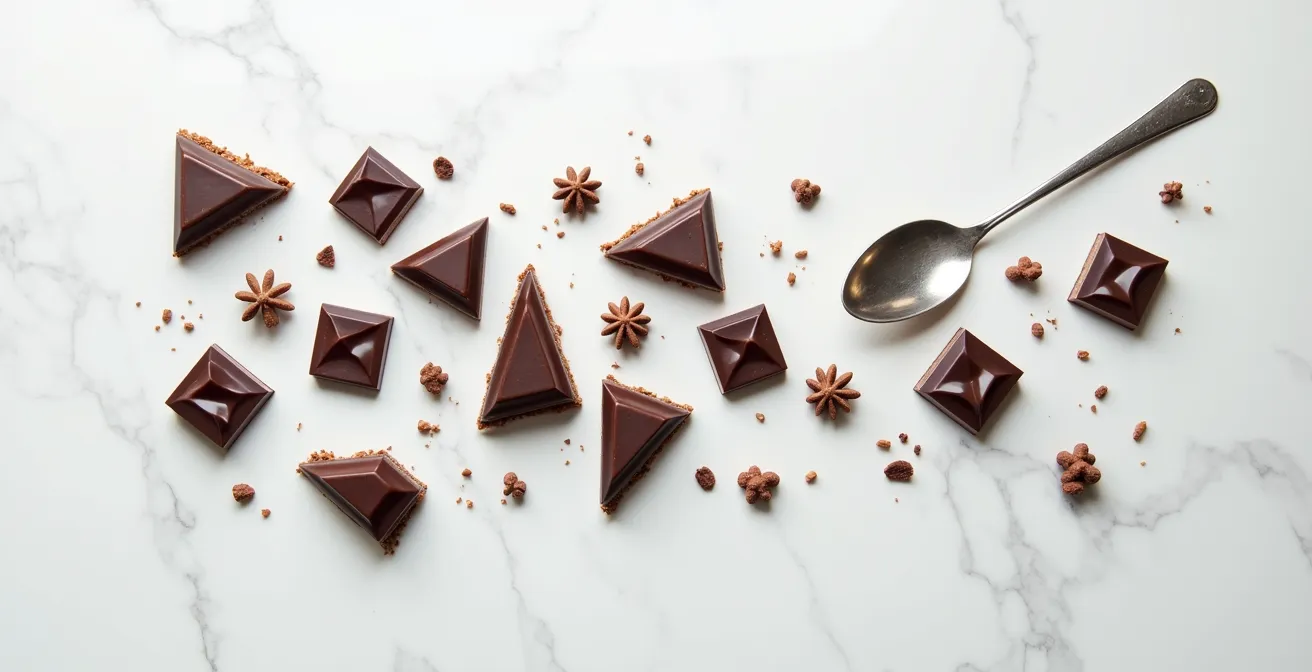
Ultimately, the goal is to treat craft chocolate not as a quick candy fix, but as a complex food worthy of attention. Paying attention to timing and portion size—one or two squares is often enough to fully appreciate the flavor—is part of the craft chocolate experience. It’s about creating a moment to focus on the sensory details. Consider these points for your tasting ritual:
- Pre-Meal: Choose a high-percentage bar (75%+) with bright, acidic notes to awaken the palate.
- Post-Lunch: Ideal timing for a theobromine-rich energy boost.
- Post-Dinner: Opt for a lower percentage (70%) or a bar with comforting, nutty flavors to avoid caffeine sensitivity.
- Portion Control: Limit yourself to 1-2 squares to prevent palate fatigue and fully appreciate the evolving flavors.
This mindful consumption is the final step in honoring the incredible journey the chocolate has taken from a farm across the world to your hands.
Key takeaways
- The price of craft chocolate directly reflects a more equitable payment model for farmers, often 2-4x the commodity price.
- Every step, from roasting to storage, involves deliberate, costly choices to preserve the bean’s unique flavor, which is lost in industrial production.
- Transparency is the new currency of ethical consumption; understanding the difference between a chocolate maker and a chocolatier is key to knowing who is adding value.
Chocolatier vs Chocolate Maker: What Is the Real Difference?
The final, crucial distinction in understanding the value behind a $10 bar is knowing who created it. The terms “chocolatier” and “chocolate maker” are often used interchangeably, but they represent two vastly different roles in the value chain. Acknowledging this difference is key to identifying where the real craft and cost lie.
A chocolatier is an artist who works with chocolate that has already been made. They purchase finished chocolate, often in the form of “couverture,” from large industrial producers. Their skill lies in melting, tempering, and molding this chocolate to create beautiful bonbons, truffles, and confections, often with added fillings and flavorings. While their work requires immense talent, they are not involved in the process of turning a raw cacao bean into chocolate. If you check the ingredients on their products, the first item will likely be “chocolate” or “couverture.”
A chocolate maker, on the other hand, performs the entire alchemical process from scratch. They are the ones engaging in Direct Trade, developing roast profiles, and grinding beans for days. They are makers in the truest sense, starting with the raw agricultural product—the cacao bean—and transforming it into a finished chocolate bar. Their ingredient list will start with “cacao beans” or “cocoa beans.” This is the bean-to-bar process, and it encapsulates all the ethical and quality-driven costs we’ve discussed. You can learn to spot the difference:
- Maker: Ingredients start with ‘Cacao beans’ or ‘Cocoa beans’. The label often details the origin farm or cooperative.
- Chocolatier: Ingredients start with ‘Chocolate’ or ‘Couverture’. The focus is on the final creation (e.g., bonbon, truffle) rather than the bean’s source.
Understanding this is empowering. It allows you to see who is truly driving the craft movement and investing at the agricultural level. And consumers are increasingly willing to support this model. Once they understand the story, research shows a willingness to pay a premium of up to 55% for certified craft bars. That price shock begins to transform into an appreciation for true value.
The next time you see a $10 chocolate bar, you won’t see just a high price. You will see a transparent receipt for a more equitable, delicious, and meaningful food system. Your purchase is the final step in a value chain that respects the farmer, the bean, and the taster, and the choice to participate is yours.