
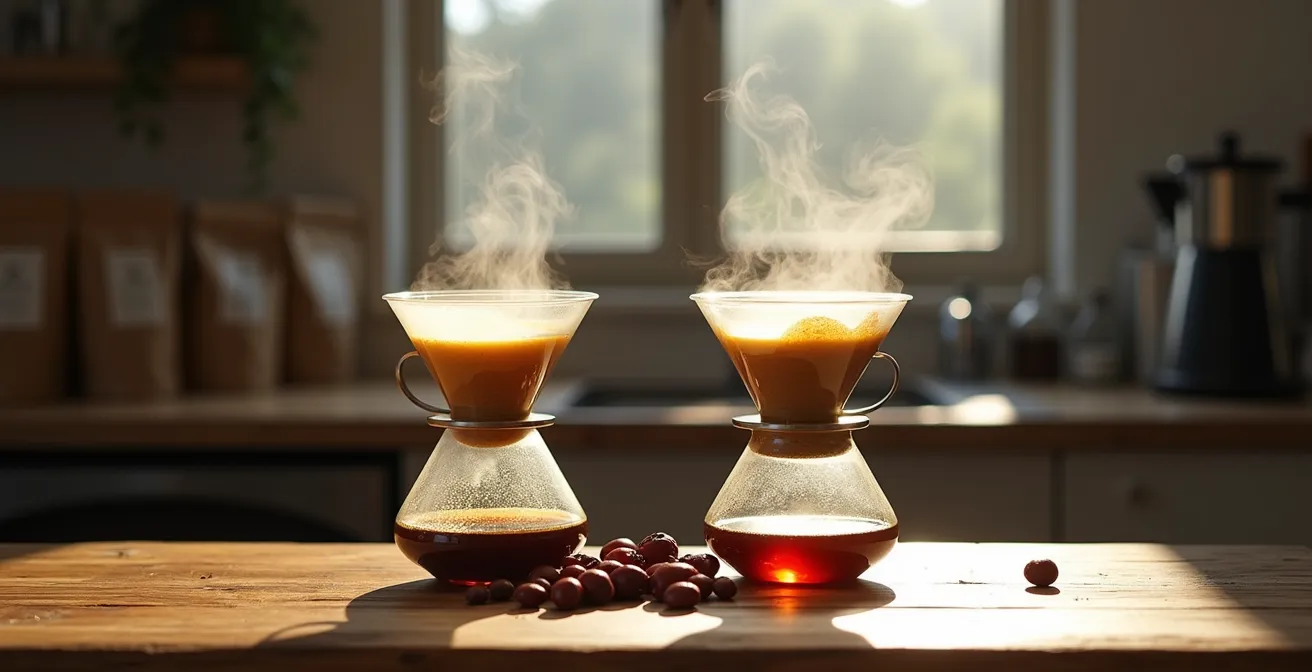
Beyond the simple tasting notes, the choice between Yirgacheffe and Sidamo is a decision about sensory structure and genetic expression.
- Yirgacheffe’s potential is in its delicate, volatile aromatics like jasmine, unlocked by specific brewing techniques.
- Sidamo’s character is defined by its bright, clean citric acidity, which can be easily muted by improper roasting.
Recommendation: Choose Yirgacheffe for a complex aromatic experience and Sidamo for a vibrant, clean, and sweet cup. This guide will teach you how to maximize both.
For any specialty coffee lover exploring the world of single-origin beans, the names Yirgacheffe and Sidamo are pillars of the craft. They are often presented as a simple choice: one is floral and tea-like, the other bright and fruity. While true on the surface, this binary description barely scratches the surface of what makes these Ethiopian treasures distinct. To truly choose between them is to understand not just what they taste like, but *why* they taste that way.
The common advice to simply pick “floral” or “fruity” overlooks the vast genetic tapestry hidden within each region. It ignores how a subtle shift in roasting can erase Sidamo’s signature lemon note, or how a rushed brew can leave Yirgacheffe’s jasmine aroma trapped in the grounds. The real difference lies not in static flavor labels, but in the dynamic interplay between their inherent genetic potential and the hands that cultivate, process, roast, and brew them.
This guide moves beyond the platitudes. We will explore the sensory structure of their acidity, the specific techniques to unlock their most coveted aromas, and the markers of authenticity that separate a truly exceptional cup from a generic blend. This is not just a comparison; it’s an invitation to taste these coffees with a deeper understanding and appreciation for their profound complexity.
To navigate the nuances of these two iconic Ethiopian regions, we will explore their unique genetic heritage, ideal brewing and roasting methods, and the key differences in their sensory profiles. This structured journey will equip you to not only choose the right bean but to unlock its full potential in every cup.
Summary: Decoding the Sensory DNA of Yirgacheffe and Sidamo
- Why “Heirloom” Means Thousands of Unknown Varieties?
- How to Brew Yirgacheffe to Maximize Jasmine Aromas?
- Washed vs Natural Yirgacheffe: The “Clean” vs “Fruit Bomb” Debate
- The Roasting Mistake That Kills the Lemon Note in Sidamo
- When to Serve Ethiopian Coffee: Breakfast or Afternoon Tea?
- Light or Medium: Which Roast Shines in a Chemex?
- Citric vs Malic Acidity: How to Tell Lemon from Apple Notes?
- Real Sidamo vs Fake: How to Spot Counterfeit Beans?
Why “Heirloom” Means Thousands of Unknown Varieties?
One of the most enchanting and misunderstood terms in Ethiopian coffee is “heirloom.” Unlike in other countries where specific cultivars like Gesha or Bourbon are celebrated, Ethiopia’s coffee landscape is a vibrant, wild garden. The term heirloom doesn’t refer to a single variety but to a dazzling mix of indigenous coffee types that have grown wild for centuries. It’s an umbrella term for a genetic library so vast that it is still not fully cataloged. Recent estimates suggest Ethiopia is home to somewhere between 6,000 and 10,000 wild coffee varieties, each with its own potential for unique flavor and aroma.
This genetic diversity is the very source of the complex and often surprising notes found in coffees from Yirgacheffe and Sidamo. It’s why one bag of Yirgacheffe might sing with notes of jasmine and peach, while another from a nearby farm might offer hints of bergamot and honeysuckle. For decades, this incredible diversity was blended together, with individual lots losing their identity within the larger regional classifications of the Ethiopia Commodity Exchange (ECX).
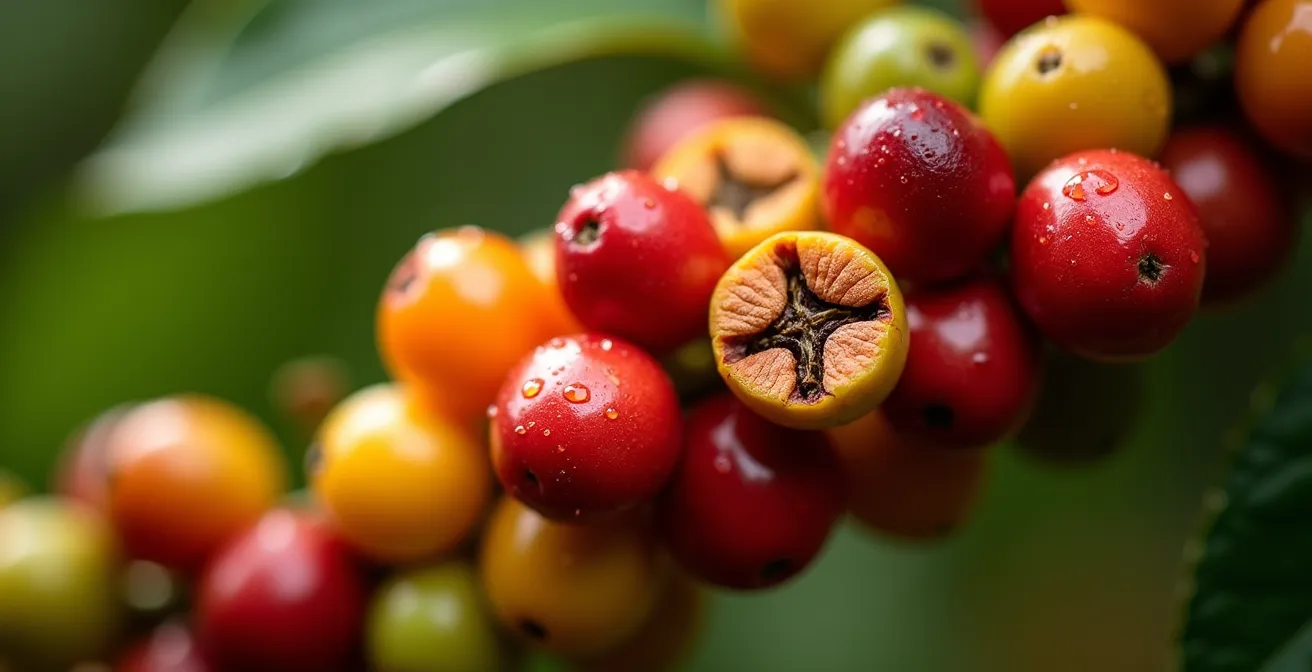
However, recent reforms are changing the landscape. A pivotal shift in the ECX system now allows for greater traceability. As described by Royal Coffee, a system implemented after 2015 provides traceability down to the local cooperative or private mill. This means that for specialty buyers, it’s now possible to source coffee from smaller, specific lots, preserving the unique genetic expression of a particular micro-climate and community. This move from regional blends to traceable micro-lots is allowing the world to finally taste the true, unblended diversity that the term “heirloom” has always promised.
How to Brew Yirgacheffe to Maximize Jasmine Aromas?
Yirgacheffe coffee is celebrated for its delicate, almost ethereal aromatics, particularly its signature jasmine note. However, these compounds are highly volatile and can be easily lost with an improper brewing technique. Maximizing these floral aromas is an act of precision, focusing on gentle extraction and careful temperature management. The goal is to release the fragrant oils without introducing bitterness. As Andualem Shiferaw, Deputy Manager of the Yirgacheffe Coffee Farmers’ Cooperative Union, aptly describes it, the coffee is a “bright, medium-bodied coffee with distinct floral tones in aroma” and an “intense and complex flavour.”
In his interview with Perfect Daily Grind, he highlights the “flavour-saturated finish” that a good brew can achieve. To capture this experience, especially with a pour-over method like a Chemex or V60, specific parameters are key. The grind must be consistent—medium-fine is ideal—to ensure an even flow of water. The temperature is also critical; water that is too hot will scorch the delicate oils, while water that is too cool will fail to extract them fully.
The general YCFCU coffee can be characterised as a bright, medium-bodied coffee with distinct floral tones in aroma, an intense and complex flavour, flowery, medium to pointed grandly exhilarating acidity, flavour-saturated finish with good and extended aftertaste.
– Andualem Shiferaw, Deputy Manager of Yirgacheffe Coffee Farmers’ Cooperative Union
The most crucial step is the “bloom.” This initial pour of a small amount of water allows the coffee grounds to de-gas, releasing trapped carbon dioxide and preparing the bed for a uniform extraction. A longer bloom of 45 to 60 seconds is especially effective for Yirgacheffe, as it gently opens up the coffee’s structure and allows the most volatile aromatics to be released just before the main brew cycle begins. A patient, methodical pour is the final piece of the puzzle, ensuring every fragrant note makes its way into your cup.
- Use 28g of coffee ground medium-fine (a setting of 6-7 on most home grinders).
- Pre-wet your filter and heat your brewing vessel with water between 200-205°F (93-96°C).
- Begin with a 45g water bloom, letting it sit for 45-60 seconds to release the delicate, volatile aromatics.
- Pour gently in circular motions to reach a total of 150g of water by the 1:00 mark.
- Continue with pulse pours, adding 100g increments of water every 30 seconds.
- Aim to finish the entire brew process by 3:00-3:30 to achieve optimal extraction without introducing bitterness.
Washed vs Natural Yirgacheffe: The “Clean” vs “Fruit Bomb” Debate
Within Yirgacheffe itself, the choice of processing method—washed or natural—creates two dramatically different sensory experiences. This isn’t just a minor variation; it’s a fundamental split in the coffee’s character. The “clean” versus “fruit bomb” debate gets to the heart of how processing can either highlight the bean’s intrinsic qualities or add layers of flavor from the coffee cherry itself. Washed Yirgacheffe is known for its clarity, elegance, and tea-like body, allowing the delicate floral and citrus notes inherent to the bean to shine through with pristine clarity.
The natural process, by contrast, involves drying the coffee bean inside the intact cherry. As the fruit dries, its sugars and flavors ferment and permeate the bean, resulting in a cup that is heavier, sweeter, and bursting with notes of ripe berries, tropical fruit, and a wine-like complexity. This “fruit bomb” profile can be intoxicating but also carries a higher risk of fermentation defects if not executed perfectly. The introduction of wet processing to Yirgacheffe in the 1970s was a turning point. It required a significant investment in both equipment and water, a scarce resource in Ethiopia. Because of this high cost, only higher quality beans were typically chosen for the washed process, which, combined with more modern oversight, led to a more consistent and marketable specialty product. This is why washed Yirgacheffe first soared to prominence globally.
The choice between them is a matter of personal preference and mood. Do you seek the clean, articulate, and bright expression of a washed coffee, or the wild, syrupy, and fruit-forward adventure of a natural? The following table breaks down their core characteristics.
| Aspect | Washed Yirgacheffe | Natural Yirgacheffe |
|---|---|---|
| Flavor Profile | Clean, tea-like, floral jasmine | Fruit-forward, berry notes, wine-like |
| Body | Light to medium, delicate | Heavy, syrupy texture |
| Acidity | Bright, citric, lemony | Muted, balanced sweetness |
| Risk Factor | Lower defect risk | Higher fermentation defects possible |
| Price Point | Premium for consistency | Variable based on quality |
The Roasting Mistake That Kills the Lemon Note in Sidamo
Sidamo coffees are treasured for their bright, clean, and often intensely citric acidity, with prominent notes of lemon, bergamot, and sweet stone fruit. However, this vibrant character is incredibly fragile and hinges on a precise roast profile. The single biggest mistake a roaster can make with a high-quality Sidamo is applying too much heat too quickly or extending the development time after the first crack. This effectively “bakes out” the delicate acids, replacing them with roasty, generic coffee flavors and muting the very qualities that make the bean special.
The reason for this fragility lies in the bean’s physical properties. Sidamo coffees are typically grown at very high elevations. As the Espresso Coffee Guide notes, these coffees grow at 1,700-2,200 meters elevation, which results in beans that are small, dense, and hard. These dense beans require a delicate touch. A roaster must charge the drum at a slightly lower temperature to allow heat to penetrate the bean evenly, preventing the outside from scorching before the inside is properly developed. The goal is a steady Rate of Rise (RoR) through the Maillard (browning) phase, followed by a very short development time—often under 60 seconds post-first-crack—to preserve that signature citric sparkle.
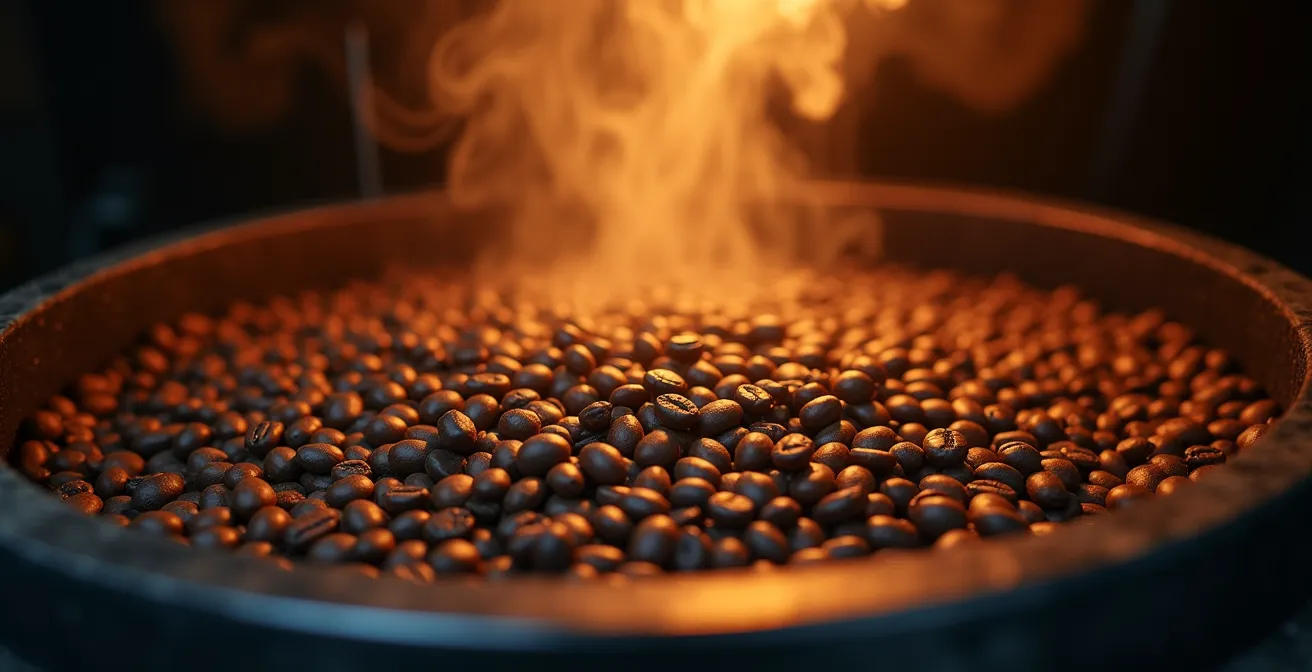
A City to City+ roast (a light to light-medium roast) is the ideal target. Pushing it even slightly further into a medium roast can begin to caramelize the sugars to a point where they overwhelm the bright acidity. For the pour-over fan, this means seeking out roasters who understand this delicate dance and explicitly label their Sidamo as a “light roast.” When you see a light-roasted Sidamo, you know the roaster has intentionally worked to preserve its most valuable asset: that brilliant, clean, lemony sweetness.
- Set charge temperature lower than average (380-390°F) to accommodate dense, high-altitude beans.
- Maintain a steady Rate of Rise (RoR) through the Maillard phase without stalling or crashing.
- Keep post-first-crack development time under 60 seconds (around 15% of total roast time).
- Target a light to medium-light roast (City to City+) to preserve citric acidity.
- Monitor for even development, avoiding scorching or tipping that can mask delicate lemon notes.
- Always sample roast small batches first to dial in the precise temperature and timing for a new lot.
When to Serve Ethiopian Coffee: Breakfast or Afternoon Tea?
The distinct profiles of Yirgacheffe and Sidamo lend themselves to different moments of the day and different food pairings. Thinking about *when* to serve these coffees can elevate the experience from a simple caffeine fix to a true sensory occasion. The light, floral, and tea-like body of a washed Yirgacheffe makes it a perfect companion for a gentle start to the day. It pairs beautifully with equally delicate foods that won’t overwhelm its nuanced profile, such as madeleines, angel food cake, or simple fruit salads. Its bright acidity cuts through sweeter breakfast items like pancakes or French toast without clashing.
A well-roasted Sidamo, with its richer body and pronounced lemon-candy sweetness, can stand up to more substantial fare. It’s an ideal afternoon coffee, pairing wonderfully with buttery pastries like croissants or even rich desserts like cheesecake, where its acidity provides a refreshing contrast. The citrus notes are particularly enhanced when served alongside a simple lemon pound cake. If you have a natural processed bean, its wine-like, fruity notes can be a fantastic match for dark chocolate, creating a complex and decadent pairing.
Beyond the modern café context, it’s worth remembering the coffee’s cultural roots. In Ethiopia, the coffee ceremony is a significant social event, not tied to a specific meal but serving as a focal point for community and conversation. The ceremony involves roasting the green beans on the spot, grinding them, and brewing the coffee in a traditional clay pot called a jebena. The coffee is served in three successive rounds—the Abol, Tona, and Baraka—each one progressively weaker but carrying its own social significance. This reminds us that these coffees are not just products, but are deeply woven into a rich cultural tapestry where the act of sharing a cup is as important as the flavor itself.
- Morning: Pair a washed Yirgacheffe with light pastries like madeleines or a simple fruit salad.
- Breakfast: The brightness of Yirgacheffe complements sweeter dishes like pancakes or French toast.
- Afternoon: Serve a robust Sidamo with richer foods like buttery croissants or a slice of cheesecake.
- Dessert: A Sidamo’s citrus notes are beautifully enhanced by a lemon pound cake.
- Chocolate Pairing: The wine-like notes in a natural processed Ethiopian coffee are a perfect match for dark chocolate.
Light or Medium: Which Roast Shines in a Chemex?
The Chemex, with its thick paper filter and elegant design, is renowned for producing an exceptionally clean and clear cup of coffee. This makes it an ideal brewing method for highlighting the delicate and complex aromatics of high-quality African coffees. As the experts at Sagebrush Coffee note, “For the best possible flavor, a Chemex is the recommended brewing method for African coffees.” However, the thick filter can also be unforgiving; it can trap the subtle flavors of an underdeveloped roast or mellow out a roast that is too dark. The key is finding the perfect roast level to shine through that dense paper.
For a classic washed Yirgacheffe, a very light roast is paramount. This preserves the most fragile floral and tea-like notes. The Chemex’s clean extraction allows these intense aromatics to penetrate the filter and dominate the cup’s profile, resulting in a brew that is bright, fragrant, and incredibly nuanced. A medium roast would begin to introduce caramel and chocolate notes that, while pleasant, would overwhelm the delicate jasmine and bergamot that make Yirgacheffe so special.
Sidamo, on the other hand, benefits from a slightly more developed roast, though still firmly in the light-to-medium category (often called a City or City+ roast). The Chemex filter is particularly good at taming any sharp or overly aggressive acidity, smoothing it out into a clean, lemon-candy sweetness. A roast that is too light might present as sour in the Chemex, while a full medium roast would, again, sacrifice its signature citric brightness. The longer extraction time typical of a Chemex brew (often 4-5 minutes) helps to ensure a full flavor development for these lighter roasts, preventing a thin or weak-tasting cup.
| Coffee Type | Optimal Roast | Brewing Impact | Flavor Result |
|---|---|---|---|
| Yirgacheffe | Very Light | Intense aromatics penetrate thick filter | Bright florals preserved |
| Sidamo | Light-Medium (City) | Filter tames sharp acidity | Clean lemon-candy sweetness |
| Extraction Time | Lighter = Longer | 4-5 minute total brew | Full flavor development |
Citric vs Malic Acidity: How to Tell Lemon from Apple Notes?
When we talk about acidity in coffee, we’re not just talking about a single sensation. Acidity has a texture, a shape, and a character. The ability to distinguish between different types of acids is a key skill in sensory analysis and is fundamental to understanding the core difference between a classic Sidamo and other bright coffees. Sidamo is the poster child for citric acid, the same acid found in lemons and limes. In the cup, it presents as a sharp, bright, and mouth-watering sensation, often felt distinctly on the sides of the tongue. It’s clean, zesty, and direct.
This is in contrast to malic acid, which is predominant in fruits like green apples and pears. Malic acid presents as a broader, smoother, and slightly less intense sensation. Think of the difference between biting into a crisp lemon wedge and a crunchy Granny Smith apple. The lemon is a sharp burst; the apple provides a more sustained, juicy tartness. Many high-quality Kenyan coffees, for example, are known for their prominent malic acidity. Some studies even suggest a scientific basis for Sidamo’s unique profile; one analysis found that Sidama coffees had higher chlorogenic acid levels, which contribute to the overall perceived acidity and body of the coffee.
Training your palate to distinguish these acids is easier than it sounds. A simple calibration exercise can make a world of difference. By tasting these sensations in isolation first, you can build a sensory memory that you can then identify in your coffee.
- Palate Calibration: Prepare three small glasses. One with a splash of lemon juice in water (citric), one with a slice of green apple (malic), and one with your brewed coffee. Taste them in that order.
- Note the Sensation: Pay attention to where and how you feel the acidity. Citric acid typically feels sharp and zesty on the sides of your tongue. Malic acid often creates a broader, mouth-watering feeling across the entire palate.
- Compare Directly: If possible, brew a Sidamo (known for citric acid) alongside a good Kenyan coffee (often malic) and taste them side-by-side.
- Document Your Findings: Keep a small journal. Note the intensity (low, medium, high) and the location/texture (sharp, broad, smooth) of the acidity in each coffee you try. This practice will rapidly improve your tasting ability.
Key Takeaways
- Genetic Diversity is Key: “Heirloom” isn’t one variety, but thousands, making Ethiopia a library of undiscovered coffee flavors.
- Brewing for Aroma vs. Acidity: Yirgacheffe brewing focuses on unlocking volatile florals with a long bloom, while Sidamo requires a roast that protects its bright citric acid.
- Roast Dictates Flavor: A light roast is non-negotiable for preserving the delicate character of both beans, especially the lemon note in Sidamo.
Real Sidamo vs Fake: How to Spot Counterfeit Beans?
As the reputation of regions like Sidamo has grown, so has the unfortunate prevalence of lower-quality or counterfeit beans being sold under its prestigious name. A bag labeled “Sidamo” might be a generic blend of lower-grade beans from various regions, lacking the bright, clean cup profile that defines a true specialty Sidamo. For the discerning buyer, knowing how to spot the markers of authenticity is crucial. It’s about looking beyond the name on the bag and examining the evidence provided by the roaster and the beans themselves.
A trustworthy roaster will provide a wealth of information that points to traceability. Look for specifics. Instead of just “Sidamo,” does the packaging mention a specific microregion like Guji (now recognized as its own distinct region), or the name of a particular washing station or cooperative? This level of detail indicates the roaster has sourced a specific, traceable lot. Another key indicator is the harvest date; specialty coffee is a fresh product, and the beans should be from the most recent season. The altitude specification is also a critical clue—genuine Sidamo is grown at 1,550-2,200 meters. Anything lower is a red flag.
Finally, inspect the beans themselves. High-grade Ethiopian coffees are meticulously sorted. A Grade 1 or 2 Sidamo should have beans of a relatively consistent size and shape, with very few defects like chips, insect damage, or “quakers” (unripened, pale beans). This grading is a serious matter in Ethiopia. As Genuine Origin explains, “Grades range from 1 (high) to 9 (low), with grades 1 and 2 considered specialty.” This rigorous system ensures that what’s labeled specialty-grade has passed through significant scrutiny. Ultimately, the final proof is in the cup: a real Sidamo must deliver on its promise of a clean, complex profile with bright, citric acidity. If it tastes muddled, earthy, or generic, it likely isn’t the real deal.
Grades range from 1 (high) to 9 (low), with grades 1 and 2 considered specialty. Ethiopia’s coffee grading system has been in place since the 1960s, with updates over the years. Ethiopia produces high quantities of both natural and washed coffees and the grading scale differs slightly by process. Natural processed coffees generally undergo more scrutiny in the grading process.
– Genuine Origin Coffee, Ethiopian Coffee Grading Guide
Your Action Plan: Sidamo Authentication Checklist
- Check for Microregion Details: Look for specifics beyond just “Sidamo,” such as a sub-region (e.g., Guji) or a specific washing station name on the packaging.
- Verify Harvest Date: Ensure the coffee is from the most recent harvest season. Specialty coffee should be consumed fresh.
- Look for Altitude Specification: Genuine Sidamo is grown between 1,550 and 2,200 meters. This information should be provided by the roaster.
- Examine Bean Uniformity: A specialty grade (1 or 2) coffee should have beans of a consistent size and color, indicating careful sorting.
- Count Defects and Taste: Inspect the unroasted or roasted beans for minimal defects. The final taste test must reveal a clean cup with bright, citric acidity.
Now that you are equipped with a deeper understanding of the sensory profiles, brewing nuances, and markers of quality for both Yirgacheffe and Sidamo, you can make a more informed choice. Your next step is to find a roaster who values transparency and shares the story behind their beans, allowing you to taste the incredible diversity that Ethiopia has to offer.